
Overview
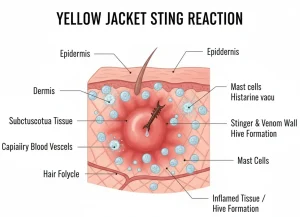
A yellow jacket sting occurs when a yellow jacket, a type of aggressive wasp, injects venom into the skin through its stinger. Yellow jackets are commonly found in many regions and often live in nests near the ground, in walls, or in outdoor structures. Unlike bees, yellow jackets can sting multiple times, making encounters particularly painful and sometimes dangerous.
For most people, a yellow jacket sting causes short-term pain and swelling. However, in some individuals, especially those with venom allergies, stings can trigger severe reactions that require immediate medical attention.
Symptoms
Symptoms of a yellow jacket sting can vary from mild to severe, depending on sensitivity to the venom and the number of stings. Common symptoms include:
-
Immediate sharp or burning pain at the sting site
-
Redness and swelling
-
Warmth and itching around the affected area
More extensive local reactions may involve increased swelling that spreads beyond the sting site and lasts several days.
Severe allergic reactions may include:
-
Difficulty breathing or wheezing
-
Swelling of the face, lips, tongue, or throat
-
Dizziness or fainting
-
Rapid heartbeat
-
Nausea or vomiting
Causes
A yellow jacket sting is caused when the insect feels threatened or is disturbed. Yellow jackets may sting defensively to protect their nest or aggressively when attracted to food, especially sweet or protein-rich items.
The venom injected during the sting contains proteins that trigger pain, inflammation, and, in some people, allergic reactions.
Risk factors
Certain factors increase the likelihood of yellow jacket stings or severe reactions, including:
-
Spending time outdoors, especially during warm months
-
Eating or drinking sweet foods and beverages outdoors
-
Wearing bright colors or scented products
-
Working near garbage, picnic areas, or flowering plants
-
A history of allergic reactions to insect stings
People with known insect venom allergies are at the highest risk for serious complications.
Complications
While most yellow jacket stings heal without issues, complications can occur, such as:
-
Secondary skin infections from scratching
-
Large local swelling that interferes with movement
-
Severe allergic reaction known as anaphylaxis
-
Toxic reactions from multiple stings, especially in children or older adults
Anaphylaxis is a medical emergency and can be life-threatening without prompt treatment.
Prevention
Preventing yellow jacket stings involves reducing exposure and avoiding behaviors that attract these insects. Helpful prevention strategies include:
-
Avoiding outdoor food exposure and keeping containers covered
-
Wearing neutral-colored clothing without strong scents
-
Keeping garbage cans tightly sealed
-
Remaining calm and slowly moving away if a yellow jacket is nearby
-
Seeking professional removal of nests near homes or work areas
People with known allergies should carry prescribed emergency medication and wear medical identification to reduce the risk of severe outcomes.
Advertisement
