
Overview
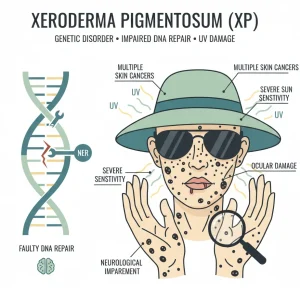
Xeroderma Pigmentosum, often abbreviated as XP, is a rare inherited genetic disorder that affects the body’s ability to repair DNA damage caused by ultraviolet radiation. As a result, people with this condition are extremely sensitive to sunlight and other sources of ultraviolet light. Even limited sun exposure can cause severe skin damage.
XP usually becomes apparent in early childhood. Without strict protection from ultraviolet exposure, affected individuals have a very high risk of developing skin cancers and eye problems at a young age.
Symptoms
Symptoms of Xeroderma Pigmentosum vary in severity but typically begin in infancy or early childhood. Common symptoms include:
-
Severe sunburn after minimal sun exposure
-
Freckling and uneven skin pigmentation at a young age
-
Dry, thin, or prematurely aged skin
-
Increased sensitivity of the eyes to light
-
Eye redness, irritation, or chronic inflammation
-
Vision problems due to corneal damage
In some cases, neurological symptoms such as hearing loss, poor coordination, or developmental delays may occur.
Causes
Xeroderma Pigmentosum is caused by mutations in genes responsible for repairing DNA damage caused by ultraviolet light. These genes normally help fix errors in DNA before they lead to cell damage or cancer.
In people with XP, the DNA repair process does not function properly. As a result, ultraviolet damage accumulates in skin and eye cells, increasing the risk of cancer and tissue degeneration.
The condition is inherited in an autosomal recessive pattern, meaning both parents must carry a faulty gene for a child to be affected.
Risk Factors
The main risk factors for Xeroderma Pigmentosum are genetic. These include:
-
Having parents who are carriers of XP-related gene mutations
-
Family history of Xeroderma Pigmentosum
-
Consanguineous parentage, which increases the likelihood of inherited genetic disorders
Environmental factors such as sun exposure worsen symptoms but do not cause the disorder itself.
Complications
Without strict sun protection and medical care, Xeroderma Pigmentosum can lead to serious complications. These may include:
-
Early-onset skin cancers, including basal cell carcinoma, squamous cell carcinoma, and melanoma
-
Severe eye damage, potentially leading to vision loss
-
Progressive skin scarring and disfigurement
-
Neurological impairment in some individuals
-
Reduced life expectancy in severe cases
Early diagnosis and careful management can significantly reduce the risk of complications.
Prevention
There is no cure or absolute prevention for Xeroderma Pigmentosum, as it is a genetic condition. However, complications can be prevented or minimized through lifelong protective measures. Preventive strategies include:
-
Strict avoidance of ultraviolet exposure
-
Use of protective clothing, hats, and ultraviolet-blocking sunglasses
-
Regular application of high-protection sunscreen
-
Avoidance of tanning beds and unfiltered artificial light sources
-
Frequent skin and eye examinations
-
Genetic counseling for affected families
With early diagnosis and consistent ultraviolet protection, many individuals with Xeroderma Pigmentosum can improve their quality of life and reduce the risk of severe outcomes.
Request an appointment
Advertisement
