
Overview
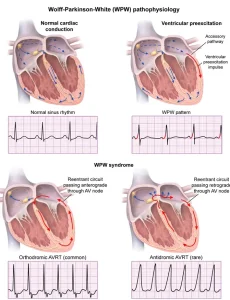
Wolff-Parkinson-White (WPW) syndrome is a heart rhythm disorder caused by an abnormal extra electrical pathway in the heart. This additional pathway allows electrical signals to bypass the normal route and travel too quickly, leading to episodes of rapid heart rate, known as tachycardia.
WPW syndrome is usually present from birth and may be discovered in childhood, adolescence, or adulthood. While some individuals never develop symptoms, others may experience recurrent episodes that require medical treatment.
Symptoms
Symptoms of WPW syndrome can vary in frequency and severity and may include:
-
Rapid or pounding heartbeat
-
Palpitations
-
Dizziness or lightheadedness
-
Shortness of breath
-
Chest discomfort or pain
-
Fatigue
-
Fainting or near-fainting episodes
-
Anxiety during rapid heart rate episodes
In infants, symptoms may include poor feeding, rapid breathing, or irritability.
Causes
WPW syndrome occurs due to the presence of an extra electrical pathway, called an accessory pathway, between the atria and ventricles of the heart. This pathway allows electrical impulses to bypass the normal conduction system and trigger abnormal heart rhythms.
The condition is typically congenital, meaning it develops before birth. In rare cases, WPW may be associated with inherited heart conditions.
Risk Factors
Factors associated with an increased risk of WPW syndrome include:
-
Being born with an abnormal cardiac electrical pathway
-
Family history of WPW syndrome
-
Certain congenital heart defects, such as Ebstein anomaly
-
Younger age, as symptoms often appear in children or young adults
WPW affects males and females equally.
Complications
If not properly managed, WPW syndrome can lead to serious complications:
-
Frequent or prolonged episodes of rapid heart rate
-
Atrial fibrillation, which may become dangerous in WPW
-
Fainting due to reduced blood flow to the brain
-
Heart failure in rare cases
-
Sudden cardiac arrest, though this is uncommon
Early diagnosis helps reduce the risk of severe complications.
Prevention
WPW syndrome cannot be prevented because it is usually present from birth, but complications can be minimized with proper care:
-
Regular cardiac evaluation and monitoring
-
Avoiding known triggers that provoke rapid heart rate episodes
-
Seeking prompt medical attention for palpitations or fainting
-
Following prescribed treatment plans, including medications or catheter ablation when recommended
-
Screening family members if advised by a healthcare provider
With appropriate diagnosis and treatment, most individuals with Wolff-Parkinson-White syndrome can lead normal, active lives and effectively control heart rhythm episodes.
Advertisement
