
Overview
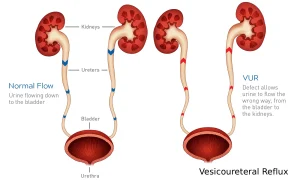
Vesicoureteral reflux (VUR) is a condition in which urine flows backward from the bladder into the ureters and sometimes up to the kidneys. Normally, urine flows in one direction—from the kidneys to the bladder—but in VUR, the one-way valve between the ureters and bladder is weakened or malformed, allowing backflow.
VUR is most commonly diagnosed in children and can increase the risk of urinary tract infections (UTIs) and kidney damage if left untreated. The severity of VUR is graded from mild to severe based on how far urine travels backward and whether it reaches the kidneys.
Symptoms
Many children with mild VUR may not have symptoms. When symptoms occur, they often relate to urinary tract infections or kidney involvement:
-
Recurrent urinary tract infections
-
Pain or burning sensation during urination
-
Frequent urination or urgency
-
Fever without obvious cause
-
Abdominal or flank pain
-
Bedwetting in older children
-
Blood in the urine in some cases
In severe cases, kidney damage may cause long-term complications without clear early symptoms.
Causes
Vesicoureteral reflux can be caused by structural or functional issues in the urinary tract:
-
Primary VUR: congenital defect in the valve between the ureter and bladder
-
Secondary VUR: caused by high bladder pressure due to obstruction, neurogenic bladder, or recurrent infections
-
Genetic predisposition, as VUR can run in families
Risk Factors
Several factors increase the likelihood of developing VUR:
-
Family history of VUR or urinary tract abnormalities
-
Female sex (more common in girls)
-
Recurrent urinary tract infections in infancy or childhood
-
Anatomical abnormalities of the urinary tract
-
Neurogenic bladder or other bladder dysfunction
Complications
If untreated, VUR can lead to complications, particularly with repeated infections:
-
Kidney infections (pyelonephritis)
-
Scarring of the kidneys (renal scarring)
-
High blood pressure later in life
-
Reduced kidney function or chronic kidney disease
-
Recurrent urinary tract infections
-
Protein in the urine (proteinuria)
Prevention
While congenital VUR cannot always be prevented, certain measures can reduce the risk of infections and kidney damage:
-
Prompt treatment of urinary tract infections
-
Regular follow-up with a pediatric urologist or nephrologist
-
Proper hydration and frequent urination
-
Use of prophylactic antibiotics in selected cases as advised by a doctor
-
Monitoring bladder and kidney function with imaging tests
Early diagnosis and treatment are essential to prevent kidney damage and maintain healthy urinary function.
Advertisement
