
Overview
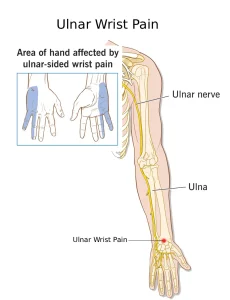
Ulnar wrist pain refers to pain located on the pinky finger side of the wrist. It is a common complaint and can result from injury, overuse, or underlying medical conditions affecting the bones, ligaments, tendons, or cartilage of the wrist. The pain may develop suddenly after trauma or gradually due to repetitive movements and can interfere with daily activities that involve gripping or twisting motions.
Symptoms
Symptoms of ulnar wrist pain vary depending on the underlying cause and severity. Common symptoms include:
-
Pain on the outer side of the wrist near the little finger
-
Swelling or tenderness around the wrist joint
-
Reduced range of motion
-
Weakness when gripping objects
-
Clicking, popping, or a feeling of instability in the wrist
-
Pain that worsens with twisting or weight-bearing activities
Causes
Ulnar wrist pain can arise from several conditions affecting the structures on the ulnar side of the wrist. Common causes include injury to the triangular fibrocartilage complex, tendon inflammation, ligament sprains, fractures, or arthritis. Repetitive strain from activities such as sports, typing, or manual labor may also contribute. In some cases, changes in wrist alignment or nerve compression can lead to persistent pain.
Risk factors
Certain factors may increase the risk of developing ulnar wrist pain:
-
Repetitive wrist movements or overuse
-
Participation in sports that involve gripping or twisting, such as tennis or golf
-
Previous wrist injury or trauma
-
Occupations involving heavy manual work
-
Age-related wear and tear of wrist structures
Complications
If ulnar wrist pain is left untreated, it may lead to ongoing discomfort and reduced wrist function. Possible complications include:
-
Chronic pain and stiffness
-
Loss of grip strength
-
Limited ability to perform daily or occupational tasks
-
Worsening of underlying conditions such as arthritis or ligament damage
-
Long-term joint instability
Prevention
While not all causes of ulnar wrist pain can be prevented, certain measures may help reduce the risk:
-
Using proper technique and protective gear during sports
-
Taking regular breaks during repetitive wrist activities
-
Maintaining wrist strength and flexibility through appropriate exercises
-
Avoiding excessive strain or heavy lifting without support
-
Seeking early medical evaluation for wrist injuries or persistent pain
Early diagnosis and appropriate treatment can help relieve ulnar wrist pain, restore wrist function, and prevent long-term complications.
Advertisement
