
Overview
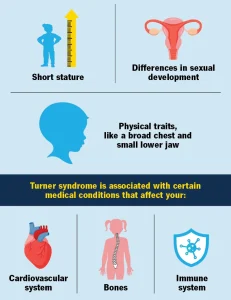
Turner syndrome is a genetic condition that affects females and occurs when one of the two X chromosomes is missing or partially missing. Chromosomes carry genetic information that determines many aspects of growth and development. In individuals with Turner syndrome, this chromosomal change can affect physical development and certain body systems.
The condition is present at birth and can lead to a variety of medical and developmental challenges. Girls with Turner syndrome may experience slower growth, delayed puberty, and infertility. They may also have certain physical characteristics and an increased risk of specific health conditions.
The severity of Turner syndrome varies widely. Some individuals have only mild features, while others may experience more noticeable health issues. With proper medical care and support, many people with Turner syndrome can lead healthy and productive lives.
Symptoms
Symptoms of Turner syndrome can vary from person to person and may be noticeable at birth or develop during childhood.
Common symptoms include:
-
Short stature
-
Delayed growth during childhood
-
Delayed or absent puberty
-
Infertility due to underdeveloped ovaries
-
Swelling of the hands and feet in newborns
-
Broad chest with widely spaced nipples
-
Low hairline at the back of the neck
Some individuals may also experience:
-
Learning difficulties, especially related to spatial skills
-
Hearing problems
-
Heart or kidney abnormalities
-
Vision problems
Despite these physical challenges, intelligence is usually normal in most individuals with Turner syndrome.
Causes
Turner syndrome occurs due to a chromosomal abnormality involving the X chromosome. Normally, females have two X chromosomes in each cell. In Turner syndrome, one of these chromosomes is missing completely or partially.
This chromosomal change can occur in several ways:
-
One entire X chromosome is missing in all cells
-
Some cells have two X chromosomes while others have only one
-
Part of one X chromosome is missing or altered
These genetic changes usually happen randomly during the formation of reproductive cells or early fetal development and are not typically inherited from parents.
Risk factors
Turner syndrome occurs randomly and is not usually related to inherited genetic factors. Because the condition results from a chromosomal change that happens before birth, there are no well-established lifestyle or environmental risk factors.
Possible factors associated with the condition include:
-
Random errors during cell division in early development
-
Chromosomal abnormalities occurring during reproduction
The condition affects only females and occurs in many populations worldwide.
Complications
Turner syndrome may lead to several medical complications affecting different body systems.
Possible complications include:
-
Heart defects, particularly involving the aorta
-
High blood pressure
-
Kidney abnormalities
-
Thyroid disorders
-
Hearing loss
-
Osteoporosis due to low estrogen levels
-
Difficulty with fertility and pregnancy
Regular medical monitoring can help identify and manage these complications early.
Prevention
Turner syndrome cannot be prevented because it results from random chromosomal changes that occur before birth. However, early diagnosis and appropriate medical care can help manage symptoms and reduce the risk of complications.
-
Regular medical evaluations to monitor growth and development
-
Growth hormone therapy to improve height during childhood
-
Hormone therapy to support puberty and bone health
-
Monitoring of heart, kidney, and thyroid function
-
Educational support if learning difficulties occur
With proper medical care and support, individuals with Turner syndrome can achieve improved health outcomes and a better quality of life.
Advertisement
