
Overview
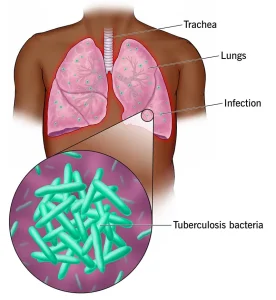
Tuberculosis is a contagious infectious disease caused by a bacterium called Mycobacterium tuberculosis. It most commonly affects the lungs, but it can also involve other parts of the body such as the brain, kidneys, spine, and lymph nodes. The disease spreads through the air when a person with active tuberculosis coughs, sneezes, or speaks, releasing tiny droplets containing the bacteria.
Tuberculosis has existed for centuries and remains a major global health concern, especially in regions with limited healthcare resources. While many people infected with the bacteria may not develop symptoms immediately, the infection can become active later if the immune system becomes weakened.
With proper diagnosis and treatment, tuberculosis can usually be cured. However, treatment requires several months of antibiotic therapy to completely eliminate the bacteria.
Symptoms
Symptoms of tuberculosis depend on the organs affected, but lung involvement is the most common.
Common symptoms include:
-
Persistent cough lasting three weeks or longer
-
Chest pain or discomfort
-
Coughing up blood or mucus
-
Fever
-
Night sweats
-
Unexplained weight loss
-
Fatigue and weakness
-
Loss of appetite
If tuberculosis spreads to other parts of the body, symptoms may vary depending on the affected organs.
Causes
Tuberculosis is caused by infection with the bacterium Mycobacterium tuberculosis. The bacteria spread through microscopic droplets released into the air when an infected person coughs, sneezes, laughs, or talks.
There are two main forms of tuberculosis infection.
Latent tuberculosis infection occurs when the bacteria remain in the body without causing symptoms. People with latent infection are not contagious but may develop active disease later.
Active tuberculosis disease occurs when the bacteria multiply and cause symptoms. People with active tuberculosis can spread the infection to others if the lungs are affected.
The risk of developing active tuberculosis increases when the immune system becomes weakened.
Risk factors
Certain conditions and circumstances can increase the risk of tuberculosis infection or progression to active disease.
-
Close contact with someone who has active tuberculosis
-
Weakened immune system
-
Poor nutrition
-
Living or working in crowded environments
-
Chronic diseases such as diabetes
-
Use of tobacco or alcohol
Healthcare workers and people living in areas where tuberculosis is more common may also have a higher risk of exposure.
Complications
If tuberculosis is not treated properly, it can lead to serious complications.
Possible complications include:
-
Severe lung damage
-
Spread of infection to the brain, bones, or kidneys
-
Meningitis caused by tuberculosis infection
-
Permanent lung scarring
-
Respiratory failure in severe cases
Drug-resistant tuberculosis may develop if treatment is incomplete or medications are not taken correctly.
Prevention
Preventing tuberculosis involves reducing exposure to the bacteria and strengthening public health measures.
-
Early detection and treatment of infected individuals
-
Vaccination with the Bacillus Calmette-Guérin vaccine in certain countries
-
Good ventilation in homes and workplaces
-
Wearing protective masks in healthcare settings when necessary
-
Screening of high-risk populations
Completing the full course of prescribed treatment is essential to cure the infection and prevent the spread of tuberculosis to others.
Advertisement
