
Overview
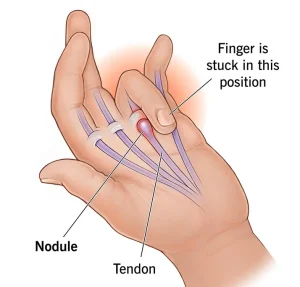
Trigger finger is a condition that affects the tendons in the fingers or thumb, causing pain, stiffness, and difficulty moving the affected finger. The condition occurs when the tendon that controls finger movement becomes inflamed or irritated, making it difficult for the tendon to glide smoothly through its sheath.
As a result, the finger may catch or lock when bent and then suddenly straighten with a snapping motion, similar to pulling and releasing a trigger. Trigger finger can affect one or more fingers and is more common in adults, especially those who perform repetitive hand movements.
Symptoms
Symptoms of trigger finger usually develop gradually and may worsen over time if not treated.
Common symptoms include:
-
Finger stiffness, especially in the morning
-
Pain or tenderness at the base of the affected finger or thumb
-
A popping or clicking sensation when moving the finger
-
Finger catching or locking in a bent position
-
A small lump or swelling in the palm near the base of the finger
-
Difficulty straightening the finger completely
In severe cases, the finger may become locked in a bent position and require assistance to straighten.
Causes
Trigger finger occurs when inflammation narrows the space within the tendon sheath that surrounds the finger tendon. This prevents the tendon from moving smoothly during finger movement.
Repeated strain or irritation can cause swelling and thickening of the tendon, leading to the characteristic catching or locking sensation. The condition may develop gradually as the tendon becomes more restricted.
Risk factors
Certain factors increase the likelihood of developing trigger finger.
These include:
-
Repetitive gripping or hand movements
-
Occupations or hobbies that require frequent use of hand tools
-
Diabetes
-
Rheumatoid arthritis
-
Age between 40 and 60 years
-
Female gender
People who frequently use their hands for repetitive tasks are more likely to experience this condition.
Complications
If left untreated, trigger finger can lead to ongoing discomfort and limited hand function.
Possible complications include:
-
Persistent pain in the affected finger
-
Permanent stiffness or limited movement
-
Finger locked in a bent position
-
Reduced ability to perform daily activities requiring hand use
Early treatment can help prevent these complications.
Prevention
Although trigger finger cannot always be prevented, certain steps may reduce the risk of developing the condition.
Helpful preventive measures include:
-
Avoid repetitive gripping or forceful hand movements when possible
-
Take frequent breaks during activities that strain the hands
-
Use proper hand positioning when using tools
-
Perform gentle hand and finger stretching exercises
-
Manage underlying health conditions such as diabetes or arthritis
Taking care of hand health and reducing strain on the fingers can help lower the risk of trigger finger.
Advertisement
