
Overview
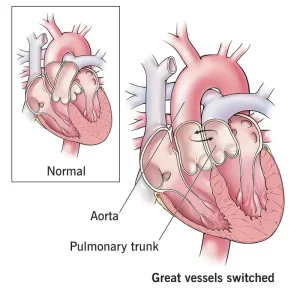
Transposition of the great arteries is a serious congenital heart defect present at birth in which the two main arteries leaving the heart are reversed. Normally, the pulmonary artery carries oxygen poor blood from the heart to the lungs, and the aorta carries oxygen rich blood from the heart to the rest of the body. In this condition, these arteries are switched.
Because of this reversal, oxygen poor blood circulates through the body instead of oxygen rich blood. As a result, the body’s tissues do not receive enough oxygen. This condition usually becomes apparent shortly after birth and requires immediate medical treatment, often including surgery.
Symptoms
Symptoms of transposition of the great arteries usually appear soon after birth because the body is not receiving enough oxygen.
Common symptoms include:
-
Bluish discoloration of the skin, lips, and nails (cyanosis)
-
Rapid breathing
-
Poor feeding
-
Weak or tired behavior
-
Difficulty gaining weight
-
Rapid heartbeat
The severity of symptoms may depend on whether other heart defects are present that allow oxygen rich and oxygen poor blood to mix.
Causes
The exact cause of transposition of the great arteries is not always known. It occurs during fetal development when the heart is forming in the womb. During this process, the major arteries develop incorrectly and become switched.
In many cases, the condition develops without a clear reason. Genetic factors and environmental influences during pregnancy may contribute to abnormal heart development.
Risk factors
Certain factors may increase the risk of a baby being born with transposition of the great arteries:
-
Maternal diabetes during pregnancy
-
Viral infections during pregnancy, such as rubella
-
Poor nutrition during pregnancy
-
Alcohol or drug use during pregnancy
-
Family history of congenital heart defects
However, many infants with this condition are born to parents with no known risk factors.
Complications
Without prompt treatment, transposition of the great arteries can lead to serious health problems because the body does not receive enough oxygen.
Possible complications include:
-
Severe oxygen deficiency in the body
-
Heart failure
-
Organ damage due to lack of oxygen
-
Developmental delays in infants
-
Life threatening complications if untreated
With early surgical treatment, many children can survive and live active lives, although ongoing medical monitoring is usually required.
Prevention
There is no guaranteed way to prevent transposition of the great arteries, but certain steps during pregnancy may help reduce the risk of congenital heart defects.
Preventive measures include:
-
Receiving regular prenatal care
-
Managing chronic health conditions such as diabetes
-
Avoiding alcohol, tobacco, and harmful substances during pregnancy
-
Eating a balanced and nutritious diet
-
Taking recommended prenatal vitamins, including folic acid
-
Protecting against infections during pregnancy
Early prenatal screening and postnatal medical evaluation help ensure prompt diagnosis and treatment if the condition is present.
Advertisement
