
Overview
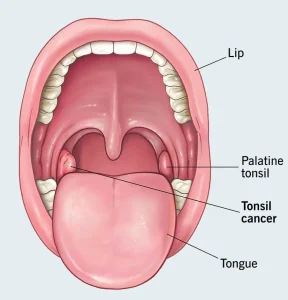
Tonsil cancer is a type of cancer that develops in the tonsils, which are two oval shaped lymphoid tissues located at the back of the throat. The tonsils play a role in the immune system by helping the body fight infections. Tonsil cancer is considered a form of oropharyngeal cancer, affecting the middle part of the throat.
Most tonsil cancers develop in the squamous cells that line the surface of the tonsils. The condition can affect swallowing, speaking, and breathing if it grows large or spreads to nearby tissues. Early detection and treatment significantly improve the chances of successful recovery.
Symptoms
Symptoms of tonsil cancer may develop gradually and sometimes resemble those of common throat infections.
Common symptoms include:
-
Persistent sore throat
-
A lump or swelling in the neck
-
Difficulty swallowing
-
Pain while swallowing
-
Ear pain, often on one side
-
A visible sore or ulcer on the tonsil
-
One tonsil appearing larger than the other
-
Persistent bad breath
-
Unexplained weight loss
-
Changes in voice or speech
Symptoms that last for several weeks should be evaluated by a healthcare professional.
Causes
Tonsil cancer occurs when cells in the tonsils undergo genetic mutations that cause them to grow and divide uncontrollably. These abnormal cells form a tumor that may invade nearby tissues or spread to other parts of the body.
The exact cause of these mutations is not always known, but certain lifestyle factors and infections can increase the likelihood of developing the disease.
Risk factors
Several factors increase the risk of tonsil cancer:
-
Tobacco use, including smoking and chewing tobacco
-
Heavy alcohol consumption
-
Infection with human papillomavirus (HPV)
-
Poor oral hygiene
-
Diet low in fruits and vegetables
-
Weakened immune system
-
Older age
-
Being male, as men are more frequently affected
HPV related tonsil cancers have become more common in recent years.
Complications
If tonsil cancer progresses, it may lead to complications affecting the throat and surrounding structures.
Possible complications include:
-
Difficulty swallowing or speaking
-
Spread of cancer to nearby lymph nodes
-
Breathing problems
-
Pain and bleeding in the throat
-
Malnutrition due to difficulty eating
-
Spread of cancer to distant organs
Early treatment helps reduce the risk of these complications.
Prevention
Although tonsil cancer cannot always be prevented, certain measures may help reduce the risk:
-
Avoid tobacco products
-
Limit alcohol consumption
-
Maintain good oral hygiene
-
Eat a balanced diet rich in fruits and vegetables
-
Receive vaccination against HPV when recommended
-
Attend regular dental and medical checkups
-
Seek medical advice for persistent throat symptoms
Healthy lifestyle choices and early medical evaluation of throat problems can help support early detection and prevention.
Request an appointment
Advertisement
