
Overview
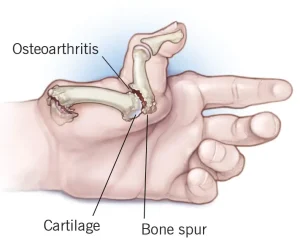
Thumb arthritis is a common condition that occurs when the cartilage in the joint at the base of the thumb wears away. This joint, known as the carpometacarpal joint, allows the thumb to move in multiple directions and helps with gripping and pinching motions. When the cartilage breaks down, the bones can rub against each other, causing pain, stiffness, and reduced movement.
Thumb arthritis is often associated with osteoarthritis and usually develops gradually over time. It is more common in people over the age of 40 and can interfere with daily activities such as opening jars, turning doorknobs, or writing.
Symptoms
Symptoms of thumb arthritis may develop slowly and become more noticeable as the condition progresses.
Common symptoms include:
-
Pain at the base of the thumb, especially during gripping or pinching
-
Swelling and tenderness around the thumb joint
-
Stiffness and reduced range of motion
-
Weakness when trying to grasp objects
-
Enlargement or bony bumps at the base of the thumb
-
Decreased strength in the hand
-
Difficulty performing tasks that require thumb movement
Symptoms may worsen with activity and improve with rest.
Causes
Thumb arthritis develops when the protective cartilage in the thumb joint gradually deteriorates. Cartilage normally allows the bones to move smoothly against each other, but when it wears down, friction increases and inflammation occurs.
Several factors can contribute to this cartilage damage, including joint wear over time, injuries to the thumb, and genetic predisposition. Repetitive stress on the thumb joint can also accelerate the breakdown of cartilage.
Risk factors
Certain factors increase the likelihood of developing thumb arthritis:
-
Aging and natural wear of joints
-
Previous thumb injuries such as fractures or sprains
-
Repetitive use of the thumb in work or hobbies
-
Family history of arthritis
-
Being female, as the condition is more common in women
-
Jobs or activities that involve frequent gripping or pinching
-
Obesity, which can increase joint stress
Understanding these risk factors can help identify individuals who may be more vulnerable to the condition.
Complications
If left untreated, thumb arthritis may lead to several complications affecting hand function.
Possible complications include:
-
Persistent pain and discomfort
-
Reduced hand strength and grip
-
Difficulty performing daily activities
-
Progressive deformity of the thumb joint
-
Limited range of motion in the thumb
Severe cases may significantly affect a person’s ability to carry out routine tasks.
Prevention
Although thumb arthritis cannot always be prevented, certain measures may help reduce stress on the thumb joint and lower the risk of developing symptoms:
-
Avoid repetitive thumb movements that strain the joint
-
Use ergonomic tools and supportive equipment during work
-
Take regular breaks during activities that involve heavy hand use
-
Maintain a healthy weight to reduce stress on joints
-
Strengthen hand and thumb muscles with gentle exercises
-
Protect the thumb from injuries during sports or physical activities
Early attention to thumb pain and proper joint care can help maintain thumb function and slow the progression of arthritis.
Advertisement
