
Overview
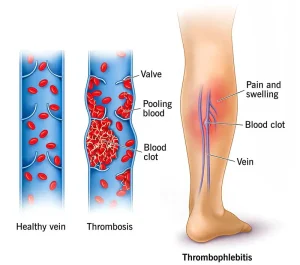
Thrombophlebitis is a condition in which a blood clot forms in a vein and causes inflammation of the vein. It most commonly affects veins in the legs, but it can also occur in other parts of the body. The condition can involve superficial veins close to the surface of the skin or deeper veins located within the muscles.
Superficial thrombophlebitis usually affects veins just under the skin and is generally less serious. Deep vein thrombophlebitis, often referred to as deep vein thrombosis, is more serious because the clot may travel to the lungs and cause a potentially life threatening condition. Early diagnosis and treatment are important to prevent complications.
Symptoms
Symptoms of thrombophlebitis depend on whether the affected vein is superficial or deep. Common symptoms include:
-
Pain or tenderness along the affected vein
-
Redness or discoloration of the skin
-
Swelling in the affected area
-
Warmth over the inflamed vein
-
A firm or cord like vein that can be felt under the skin
-
Leg heaviness or discomfort
-
Swelling of the entire limb in deeper vein involvement
In severe cases, symptoms such as sudden shortness of breath or chest pain may indicate that a clot has traveled to the lungs and require immediate medical attention.
Causes
Thrombophlebitis occurs when a blood clot forms in a vein and triggers inflammation. The clot may develop due to slowed blood flow, injury to the vein, or conditions that increase the blood’s tendency to clot.
Common causes include:
-
Prolonged inactivity, such as long periods of sitting or bed rest
-
Injury or trauma to a vein
-
Intravenous catheter or medical procedures involving veins
-
Varicose veins
-
Blood clotting disorders
-
Surgery or hospitalization
-
Pregnancy or hormonal changes
These factors can interfere with normal blood circulation and increase the likelihood of clot formation.
Risk factors
Several factors can increase the risk of developing thrombophlebitis:
-
Long periods of immobility, such as during travel or illness
-
Varicose veins
-
Obesity
-
Smoking
-
Pregnancy
-
Use of hormonal medications such as birth control pills or hormone therapy
-
Personal or family history of blood clots
-
Cancer or certain chronic diseases
-
Older age
People with multiple risk factors may have a higher chance of developing the condition.
Complications
If not properly treated, thrombophlebitis can lead to serious complications. Possible complications include:
-
Deep vein thrombosis
-
Pulmonary embolism if a clot travels to the lungs
-
Chronic swelling or pain in the affected limb
-
Skin discoloration or ulcers due to poor circulation
-
Recurrent blood clots
Prompt treatment helps reduce the risk of these complications.
Prevention
Certain lifestyle habits and preventive measures can help lower the risk of thrombophlebitis:
-
Stay physically active and avoid long periods of immobility
-
Take breaks to walk or stretch during long travel
-
Maintain a healthy body weight
-
Stop smoking
-
Use compression stockings if recommended by a healthcare provider
-
Follow medical advice after surgery or hospitalization
-
Stay well hydrated
These steps can improve blood circulation and reduce the likelihood of clot formation in the veins.
Advertisement
