
Overview
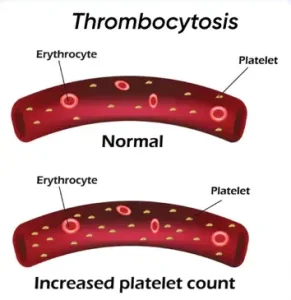
Thrombocytosis is a condition in which the body produces an abnormally high number of platelets in the blood. Platelets are small blood cells that help the body form clots to stop bleeding. While platelets are essential for normal blood clotting, too many of them can increase the risk of abnormal clot formation.
There are two main types of thrombocytosis. Primary thrombocytosis occurs due to disorders in the bone marrow that lead to excessive platelet production. Secondary thrombocytosis, also known as reactive thrombocytosis, occurs as a response to another medical condition such as infection, inflammation, or certain diseases. Many cases are discovered during routine blood tests.
Symptoms
Many people with thrombocytosis do not experience noticeable symptoms, especially in mild cases. When symptoms occur, they are often related to abnormal blood clotting or, in some cases, bleeding.
Possible symptoms include:
-
Headaches
-
Dizziness or lightheadedness
-
Chest pain
-
Weakness or fatigue
-
Vision changes
-
Tingling or numbness in the hands and feet
-
Nosebleeds or easy bruising
-
Temporary vision disturbances
-
Burning sensation in the hands or feet
Symptoms may vary depending on the underlying cause and the level of platelets in the blood.
Causes
Thrombocytosis can develop for different reasons depending on the type of condition.
Primary thrombocytosis occurs when the bone marrow produces too many platelets due to abnormalities in blood-forming cells. This type is usually associated with bone marrow disorders.
Secondary thrombocytosis is more common and occurs when the body produces extra platelets in response to another condition. Common causes include:
-
Infections
-
Chronic inflammatory diseases
-
Iron deficiency
-
Certain cancers
-
Removal of the spleen
-
Blood loss or trauma
-
Recovery from major surgery
-
Some medications
Identifying and treating the underlying condition often helps normalize platelet levels in secondary thrombocytosis.
Risk factors
Several factors may increase the risk of developing thrombocytosis:
-
Chronic infections or inflammatory diseases
-
Iron deficiency anemia
-
Certain cancers
-
Recent surgery or trauma
-
Removal of the spleen
-
Bone marrow disorders
-
Advanced age
Individuals with long term inflammatory conditions or blood disorders may be at higher risk.
Complications
If platelet levels become very high, thrombocytosis can lead to complications related to abnormal clotting or bleeding.
Possible complications include:
-
Blood clots in arteries or veins
-
Stroke
-
Heart attack
-
Deep vein thrombosis
-
Pulmonary embolism
-
Excessive bleeding in rare cases
The risk of complications depends on the underlying cause and the platelet count.
Prevention
Preventing thrombocytosis often involves managing the conditions that can lead to increased platelet production. Although primary thrombocytosis cannot always be prevented, certain measures may help reduce the risk of secondary thrombocytosis:
-
Treat infections promptly
-
Manage chronic inflammatory diseases effectively
-
Maintain adequate iron levels through diet or supplements if needed
-
Attend regular health checkups and blood tests
-
Follow medical advice for underlying health conditions
Early diagnosis and proper treatment of underlying causes can help maintain balanced platelet levels and reduce potential complications.
Advertisement
