
Overview
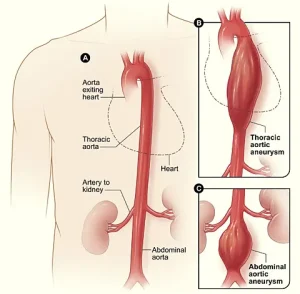
Thoracic aortic aneurysm is a condition in which a weakened area of the aorta, the largest artery in the body, becomes enlarged or bulges within the chest region. The aorta carries oxygen-rich blood from the heart to the rest of the body. When part of the aortic wall weakens, it can expand and form an aneurysm.
Thoracic aortic aneurysms often develop slowly and may not cause noticeable symptoms for many years. However, if the aneurysm grows large or ruptures, it can become life-threatening. Early detection through medical imaging and proper monitoring can help prevent serious complications.
Symptoms
Many people with thoracic aortic aneurysm do not experience symptoms until the aneurysm becomes large or begins to cause pressure on nearby organs.
Possible symptoms include:
-
Chest pain or pressure
-
Back pain, especially in the upper back
-
Shortness of breath
-
Difficulty swallowing
-
Hoarseness
-
Persistent cough
-
Pain in the chest, jaw, or neck
If the aneurysm ruptures or tears, sudden severe pain in the chest or back may occur and requires immediate medical attention.
Causes
Thoracic aortic aneurysms occur when the wall of the aorta weakens and begins to expand. This weakening can develop over time due to several underlying conditions.
Common causes include:
-
Atherosclerosis, a buildup of fatty deposits in the arteries
-
High blood pressure that places stress on artery walls
-
Genetic connective tissue disorders that weaken blood vessels
-
Inflammation of the aorta
-
Injury or trauma to the chest
-
Aging-related changes in the blood vessels
These factors can gradually weaken the aortic wall and increase the risk of aneurysm formation.
Risk Factors
Several factors can increase the risk of developing a thoracic aortic aneurysm.
Risk factors include:
-
High blood pressure
-
Smoking
-
Family history of aortic aneurysm
-
Certain genetic conditions affecting connective tissue
-
Age over 60 years
-
Male gender
-
History of other blood vessel diseases
Regular health checkups and monitoring can help identify aneurysms early in people at higher risk.
Complications
Thoracic aortic aneurysm can lead to serious complications if the enlarged section of the aorta continues to grow.
Possible complications include:
-
Aortic rupture, which can cause life-threatening internal bleeding
-
Aortic dissection, a tear in the inner layer of the aorta
-
Damage to nearby organs due to pressure from the enlarged artery
-
Reduced blood flow to certain parts of the body
-
Heart-related complications
Prompt medical care is essential if an aneurysm becomes large or begins to cause symptoms.
Prevention
Although some causes cannot be prevented, certain lifestyle habits and medical management can help reduce the risk of thoracic aortic aneurysm or slow its progression.
Preventive measures include:
-
Controlling high blood pressure with medication and lifestyle changes
-
Avoiding smoking and tobacco use
-
Maintaining a healthy diet and regular exercise routine
-
Managing cholesterol levels
-
Undergoing regular medical screenings if there is a family history of aneurysms
-
Following medical advice for monitoring and treatment if an aneurysm is detected
Early diagnosis and proper management play an important role in preventing complications associated with thoracic aortic aneurysm.
Request an appointment
Advertisement
