
Overview
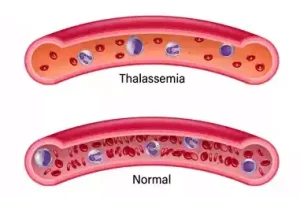
Thalassemia is an inherited blood disorder that affects the body’s ability to produce healthy hemoglobin, the protein in red blood cells responsible for carrying oxygen throughout the body. In people with thalassemia, the body produces less hemoglobin than normal, which leads to anemia and reduced oxygen delivery to tissues.
The condition is passed from parents to children through genes. Thalassemia can range from mild to severe depending on the type and the number of affected genes. In severe cases, regular medical treatment and blood transfusions may be required to manage symptoms and maintain healthy blood levels.
Symptoms
Symptoms of thalassemia vary depending on the severity of the disorder. Mild forms may cause few or no symptoms, while severe forms can lead to significant health problems.
Common symptoms include:
-
Fatigue and weakness
-
Pale or yellowish skin
-
Shortness of breath
-
Slow growth in children
-
Delayed puberty
-
Dark-colored urine
-
Bone deformities, particularly in the face
-
Enlarged spleen
-
Frequent infections
Severe symptoms often appear within the first two years of life.
Causes
Thalassemia is caused by genetic mutations that affect the production of hemoglobin. These mutations disrupt the formation of the protein chains that make up hemoglobin, leading to abnormal red blood cells that break down more easily.
There are two main types of thalassemia:
-
Alpha thalassemia, caused by reduced or absent production of alpha globin chains
-
Beta thalassemia, caused by reduced or absent production of beta globin chains
The severity depends on how many genes are affected and the specific mutation involved.
Risk Factors
The main risk factor for thalassemia is inherited genetic mutations from parents.
Risk factors include:
-
Having parents who carry the thalassemia gene
-
Family history of thalassemia
-
Origin from regions where the condition is more common, such as the Mediterranean, Middle East, South Asia, and Southeast Asia
-
Being a carrier of alpha or beta thalassemia genes
Genetic testing can help identify carriers and assess the risk of passing the disorder to children.
Complications
Severe thalassemia can lead to several long-term health complications if not properly managed.
Possible complications include:
-
Severe anemia requiring frequent blood transfusions
-
Iron overload due to repeated transfusions
-
Enlarged spleen
-
Bone deformities and weakened bones
-
Heart problems
-
Liver disease
-
Delayed growth and puberty
Regular medical care and treatment can help reduce the risk of these complications.
Prevention
Because thalassemia is a genetic disorder, it cannot be completely prevented. However, certain steps can help reduce the risk of passing the condition to future generations.
Preventive measures include:
-
Genetic counseling for couples who have a family history of thalassemia
-
Carrier screening before marriage or pregnancy
-
Prenatal testing to detect the condition during pregnancy
-
Awareness programs in regions where thalassemia is common
Early diagnosis and proper medical management can greatly improve quality of life for individuals living with thalassemia.
Advertisement
