
Overview
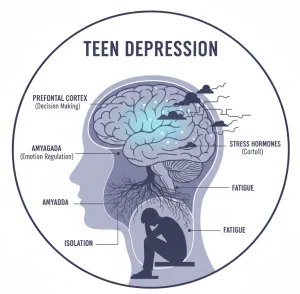
Teen depression is a serious mental health condition that affects how adolescents think, feel, and behave. It goes beyond normal mood changes associated with growing up and can interfere with school performance, relationships, and daily activities. Teen depression is common and treatable, but it often goes unrecognized because its symptoms may be mistaken for typical teenage behavior.
Early identification and proper support are essential, as untreated depression can have long-term emotional, social, and physical consequences.
Symptoms
Symptoms of teen depression can vary in severity and may appear differently than depression in adults. They usually persist for weeks or longer.
Common symptoms include:
-
Persistent sadness, hopelessness, or emptiness
-
Irritability, anger, or frequent mood swings
-
Loss of interest in activities once enjoyed
-
Changes in appetite or weight
-
Sleep problems, including insomnia or excessive sleeping
-
Fatigue or low energy
-
Difficulty concentrating or making decisions
-
Decline in school performance
-
Feelings of worthlessness or excessive guilt
-
Withdrawal from friends or family
Some teens may also express thoughts about death or self-harm, which require immediate attention.
Causes
Teen depression does not have a single cause and usually results from a combination of factors.
Common contributing causes include:
-
Chemical imbalances in the brain
-
Genetic vulnerability or family history of depression
-
Hormonal changes during adolescence
-
Chronic stress or academic pressure
-
Bullying or social difficulties
-
Trauma, abuse, or loss of a loved one
-
Long-term illness or chronic pain
-
Substance use
Environmental and emotional factors often interact with biological influences.
Risk Factors
Certain factors increase the likelihood of developing depression during adolescence.
Risk factors include:
-
Family history of depression or other mental health disorders
-
Low self-esteem or negative self-image
-
High levels of stress at school or home
-
Exposure to violence, neglect, or abuse
-
Social isolation or lack of support
-
Academic difficulties
-
Major life changes, such as divorce or relocation
-
Excessive use of social media contributing to comparison or cyberbullying
Having multiple risk factors increases vulnerability.
Complications
If left untreated, teen depression can lead to serious short-term and long-term complications.
Possible complications include:
-
Substance abuse
-
Academic failure or school dropout
-
Social withdrawal
-
Risky behaviors
-
Eating disorders
-
Self-harm or suicidal behavior
-
Ongoing mental health problems into adulthood
Early intervention greatly reduces the risk of these outcomes.
Prevention
While teen depression cannot always be prevented, certain strategies may reduce risk and promote emotional well-being.
Preventive measures include:
-
Encouraging open communication at home
-
Building strong social and family support systems
-
Teaching healthy coping and stress-management skills
-
Promoting regular physical activity and healthy sleep habits
-
Monitoring academic and emotional stress levels
-
Addressing bullying promptly
-
Seeking professional help early when mood changes persist
Awareness, early support, and timely mental health care play a vital role in preventing the progression and complications of teen depression.
Advertisement
