
Overview
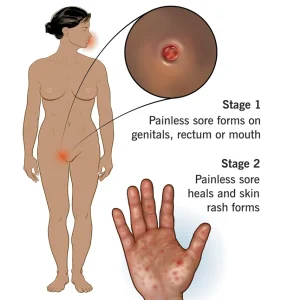
Syphilis is a bacterial infection that is usually spread through sexual contact. It is caused by a bacterium called Treponema pallidum. The infection typically begins as a painless sore and can progress through several stages if not treated. Syphilis can affect many parts of the body, including the skin, mucous membranes, nervous system, and internal organs.
The disease develops in stages known as primary, secondary, latent, and tertiary syphilis. Each stage has different symptoms and health effects. Early stages are often easier to treat, while untreated infection may lead to serious complications over time.
Syphilis can also be passed from a pregnant person to their baby during pregnancy or childbirth, which can cause serious health problems for the infant.
Symptoms
Symptoms of syphilis vary depending on the stage of the infection.
Primary stage symptoms include:
-
A small, painless sore called a chancre at the site of infection
-
Swollen lymph nodes near the sore
Secondary stage symptoms may include:
-
Skin rash, often on the palms of the hands or soles of the feet
-
Fever
-
Sore throat
-
Fatigue
-
Muscle aches
-
Swollen lymph nodes
-
Hair loss in patches
Latent stage symptoms usually do not produce noticeable signs, but the infection remains in the body.
Tertiary stage symptoms can involve serious complications affecting organs such as the heart, brain, nerves, and eyes.
Causes
Syphilis is caused by the bacterium Treponema pallidum and spreads through direct contact with a syphilis sore.
Common ways the infection spreads include:
-
Vaginal, anal, or oral sexual contact with an infected person
-
Direct contact with syphilis sores during sexual activity
-
Transmission from a pregnant person to their baby during pregnancy
Syphilis cannot be spread through casual contact such as hugging, sharing food, or using the same toilet.
Risk Factors
Certain factors can increase the risk of acquiring syphilis.
Risk factors include:
-
Having unprotected sexual contact
-
Having multiple sexual partners
-
Having another sexually transmitted infection
-
Being in close sexual contact with an infected partner
-
Lack of regular sexual health screening
People who do not use protection during sexual activity may have a higher risk of infection.
Complications
If untreated, syphilis can cause severe and potentially life-threatening complications.
Possible complications include:
-
Damage to the heart and blood vessels
-
Nervous system problems affecting the brain and spinal cord
-
Vision or hearing loss
-
Organ damage
-
Pregnancy complications and congenital infection in newborns
Early treatment can prevent most of these complications.
Prevention
Preventing syphilis involves reducing exposure to the bacteria and practicing safer sexual behaviors.
Preventive measures include:
-
Using condoms during sexual activity
-
Limiting the number of sexual partners
-
Regular testing for sexually transmitted infections
-
Open communication with sexual partners about health status
-
Early medical treatment if symptoms appear
Pregnant individuals should undergo routine screening for syphilis to prevent transmission to the baby. Early detection and treatment are highly effective in controlling the infection and preventing complications.
Advertisement
