
Overview
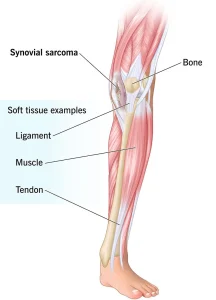
Synovial sarcoma is a rare type of cancer that develops in the soft tissues of the body, often near joints such as the knees, ankles, or shoulders. Despite its name, synovial sarcoma does not necessarily originate from the synovial tissue that lines joints. Instead, it arises from cells in the soft tissues, including muscles, tendons, and connective tissues.
This type of cancer most commonly affects adolescents and young adults, although it can occur at any age. Synovial sarcoma usually grows slowly at first but can become more aggressive over time. It may spread to other parts of the body, particularly the lungs, if not detected and treated early.
Early diagnosis and appropriate treatment are important for improving outcomes and managing the disease effectively.
Symptoms
Symptoms of synovial sarcoma may develop gradually and often resemble other less serious conditions, which can delay diagnosis.
Common symptoms include:
-
A painless lump or swelling near a joint
-
Pain or tenderness in the affected area as the tumor grows
-
Limited movement in a nearby joint
-
Numbness or tingling if the tumor presses on nerves
-
Swelling that slowly increases in size
In some cases, the lump may be present for months or even years before it becomes noticeable or painful.
Causes
The exact cause of synovial sarcoma is not fully understood, but it is associated with a specific genetic change in the cells.
Possible causes include:
-
A chromosomal abnormality in which parts of two chromosomes switch places
-
Genetic mutations that cause abnormal cell growth
-
Changes in cell regulation that lead to tumor development
This genetic change usually occurs randomly and is not typically inherited from parents.
Risk Factors
Because synovial sarcoma is rare, the known risk factors are limited.
Possible risk factors include:
-
Adolescence and young adulthood
-
Exposure to certain types of radiation in the past
-
Genetic mutations affecting cell growth
Unlike many other cancers, lifestyle factors such as diet or smoking are not strongly linked to synovial sarcoma.
Complications
If synovial sarcoma grows or spreads, it can lead to several complications.
Possible complications include:
-
Spread of cancer to the lungs or other organs
-
Damage to nearby nerves, muscles, or joints
-
Reduced mobility in the affected limb
-
Recurrence of the tumor after treatment
Advanced cases may require extensive treatment to control the disease.
Prevention
There is currently no known way to prevent synovial sarcoma because the genetic changes that cause it occur randomly.
However, early detection and medical evaluation are important when unusual lumps or swelling appear near joints.
Helpful preventive practices include:
-
Seeking medical evaluation for persistent or growing lumps
-
Attending regular health checkups
-
Following recommended medical care if previously treated for soft tissue tumors
Prompt diagnosis and treatment can improve the chances of successful management of synovial sarcoma.
Advertisement
