
Overview
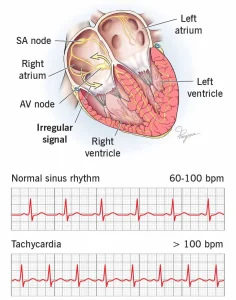
Supraventricular tachycardia is a condition in which the heart beats much faster than normal due to abnormal electrical signals in the upper chambers of the heart, known as the atria. In this condition, the heart rate may suddenly increase to 150 to 250 beats per minute, even when a person is at rest.
Episodes of supraventricular tachycardia usually begin and end suddenly. Some people experience occasional brief episodes, while others may have frequent or prolonged attacks. Although it can be uncomfortable and frightening, supraventricular tachycardia is often not life-threatening in otherwise healthy individuals.
This condition can occur in people of any age, including children and young adults. Treatment depends on how often episodes occur and how severe the symptoms are.
Symptoms
Symptoms of supraventricular tachycardia often appear suddenly and may last from a few seconds to several hours.
Common symptoms include:
-
Rapid heartbeat or palpitations
-
Fluttering sensation in the chest
-
Dizziness or lightheadedness
-
Shortness of breath
-
Chest discomfort or pressure
-
Fatigue or weakness
-
Anxiety during an episode
In some cases, people may faint or feel close to fainting if the heart rate becomes extremely fast.
Causes
Supraventricular tachycardia occurs when abnormal electrical pathways or signals disrupt the normal rhythm of the heart.
Possible causes include:
-
Abnormal electrical circuits in the heart
-
Structural heart abnormalities present from birth
-
Previous heart surgery
-
Heart disease or heart damage
-
Excessive caffeine or stimulant use
-
Stress or intense physical activity
-
Thyroid disorders
In many people, the exact cause may not be clearly identified.
Risk Factors
Certain factors can increase the risk of developing supraventricular tachycardia.
Risk factors include:
-
Congenital heart defects
-
Family history of heart rhythm disorders
-
High levels of stress or anxiety
-
Excessive caffeine or alcohol intake
-
Smoking
-
Certain medications or stimulants
-
Thyroid disease
Women and young adults may experience this condition more frequently than other groups.
Complications
In most cases, supraventricular tachycardia does not cause serious complications, especially when episodes are short and infrequent. However, frequent or prolonged episodes may affect heart function.
Possible complications include:
-
Fainting due to reduced blood flow to the brain
-
Heart failure in severe or untreated cases
-
Low blood pressure during episodes
-
Reduced quality of life due to frequent symptoms
Proper diagnosis and management help reduce the risk of complications.
Prevention
Preventing supraventricular tachycardia focuses on identifying and avoiding triggers and maintaining overall heart health.
Preventive measures include:
-
Limiting caffeine and stimulant intake
-
Managing stress through relaxation techniques
-
Avoiding smoking and excessive alcohol consumption
-
Following a heart-healthy lifestyle with regular exercise
-
Managing underlying conditions such as thyroid disorders
-
Taking prescribed medications as directed by a healthcare provider
People who experience frequent episodes should consult a healthcare professional for proper evaluation and treatment options.
Advertisement
