
Overview
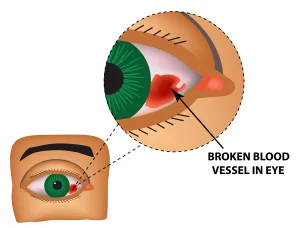
Subconjunctival hemorrhage is a condition in which a small blood vessel breaks just beneath the clear surface of the eye, called the conjunctiva. This causes a bright red patch to appear on the white part of the eye. Although it can look alarming, subconjunctival hemorrhage is usually harmless and often resolves on its own without treatment.
The conjunctiva cannot absorb blood quickly, so the blood becomes trapped and visible. Most people notice the red spot suddenly when looking in a mirror or when someone else points it out. In many cases, there is no pain, vision change, or other serious symptoms.
Subconjunctival hemorrhage can occur in people of any age, but it is more common in older adults because blood vessels become more fragile with age. Minor strain, coughing, or even rubbing the eyes can sometimes cause the small vessels to rupture.
Symptoms
The most noticeable sign is a bright red or dark red patch on the white of the eye. Other symptoms are usually minimal.
Common symptoms include:
-
Bright red or blood-colored patch on the white of the eye
-
No pain in most cases
-
No discharge from the eye
-
Normal vision
-
Mild eye irritation or scratchy feeling in some people
The red patch may look large at first but gradually fades over one to two weeks as the body absorbs the blood.
Causes
Subconjunctival hemorrhage occurs when a tiny blood vessel in the eye breaks. In many cases, the exact cause is not known.
Possible causes include:
-
Sudden increase in blood pressure from coughing, sneezing, or vomiting
-
Straining during heavy lifting or constipation
-
Rubbing the eyes too hard
-
Minor eye injury
-
Contact lens irritation
-
Eye surgery or medical procedures involving the eye
-
High blood pressure
-
Use of blood-thinning medications
Sometimes the condition appears spontaneously without any clear trigger.
Risk Factors
Certain factors can increase the likelihood of developing a subconjunctival hemorrhage.
Risk factors include:
-
Older age
-
High blood pressure
-
Diabetes
-
Blood clotting disorders
-
Use of anticoagulant or blood-thinning medications
-
Frequent eye rubbing
-
Wearing contact lenses
-
Recent eye surgery or trauma
People who experience frequent episodes may need medical evaluation to identify an underlying cause.
Complications
Subconjunctival hemorrhage rarely causes complications. In most cases, it heals on its own within one to two weeks without affecting vision or eye health.
Possible but uncommon concerns include:
-
Recurrent episodes that may indicate an underlying health problem
-
Mild irritation or discomfort in the eye
-
Cosmetic concern due to the visible red patch
If the condition occurs repeatedly or is associated with pain, vision changes, or swelling, medical evaluation is recommended.
Prevention
While it may not always be possible to prevent subconjunctival hemorrhage, certain measures can reduce the risk.
Preventive steps include:
-
Avoid rubbing the eyes forcefully
-
Manage high blood pressure with proper treatment
-
Use protective eyewear during activities that could injure the eye
-
Handle contact lenses carefully and maintain proper hygiene
-
Treat chronic coughing or sneezing
-
Consult a doctor before using blood-thinning medications if recurrent bleeding occurs
Maintaining overall eye health and controlling underlying medical conditions can help reduce the chances of recurrence.
Advertisement
