
Overview
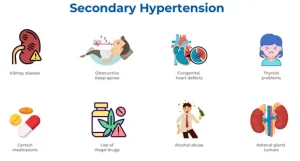
Secondary hypertension is high blood pressure caused by an identifiable underlying medical condition or medication. Unlike primary hypertension, which develops gradually without a clear cause, secondary hypertension results from specific problems that affect the kidneys, hormones, blood vessels, or other body systems.
This type of hypertension may appear suddenly, be more severe, or be difficult to control with standard blood pressure medications. Treating the underlying cause often leads to significant improvement or resolution of high blood pressure.
Symptoms
Secondary hypertension may not cause noticeable symptoms on its own, but signs can appear due to very high blood pressure or the condition causing it.
Common symptoms may include:
-
Persistent headaches
-
Dizziness
-
Shortness of breath
-
Chest pain
-
Blurred vision
-
Fatigue
-
Nosebleeds
-
Palpitations
In many cases, symptoms are related more to the underlying disorder than to high blood pressure itself.
Causes
Secondary hypertension develops due to conditions or substances that interfere with normal blood pressure regulation.
Common causes include:
-
Kidney diseases
-
Narrowing of the arteries supplying the kidneys
-
Hormonal disorders affecting adrenal or thyroid glands
-
Obstructive sleep apnea
-
Certain congenital blood vessel conditions
-
Pregnancy-related conditions
-
Use of medications such as birth control pills, steroids, decongestants, or pain relievers
-
Excessive alcohol or illicit drug use
Identifying the cause is essential for effective treatment.
Risk Factors
Several factors increase the likelihood of developing secondary hypertension.
Risk factors include:
-
Known kidney or endocrine disorders
-
Family history of hormonal or kidney diseases
-
Use of medications known to raise blood pressure
-
Obesity
-
Sleep disorders
-
Younger age at onset of hypertension
-
Sudden or resistant high blood pressure
Secondary hypertension is often suspected when blood pressure is unusually severe or difficult to control.
Complications
If left untreated, secondary hypertension can lead to serious health problems.
Possible complications include:
-
Heart disease
-
Stroke
-
Kidney damage or failure
-
Vision problems
-
Blood vessel damage
-
Increased risk of heart attack
-
Complications related to the underlying condition
Early diagnosis and management reduce the risk of long-term damage.
Prevention
Secondary hypertension cannot always be prevented, but early detection and proper management of underlying conditions can reduce risk and complications.
Preventive measures include:
-
Regular blood pressure monitoring
-
Managing chronic medical conditions effectively
-
Using medications only as prescribed
-
Maintaining a healthy weight
-
Limiting alcohol intake
-
Avoiding tobacco use
-
Seeking medical evaluation for sudden or difficult-to-control high blood pressure
Treating the root cause and maintaining regular follow-up care are key to preventing complications associated with secondary hypertension.
Advertisement
