
Overview
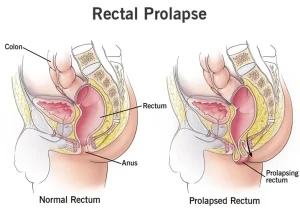
Rectal prolapse is a condition in which part or all of the rectum protrudes through the anal opening. It occurs when the rectum loses its normal attachments inside the body, allowing it to slip downward. Rectal prolapse can affect children, adults, and older individuals, with higher prevalence in elderly adults. The condition may range from mild and intermittent to severe and persistent, often requiring medical or surgical management.
Rectal Prolapse Symptoms
Symptoms may worsen over time as the prolapse becomes more frequent or permanent.
-
Visible protrusion of rectal tissue through the anus
-
Sensation of a bulge or mass during bowel movements
-
Difficulty controlling bowel movements
-
Mucus discharge or bleeding from the rectum
-
Anal discomfort or pain
-
Constipation or alternating constipation and diarrhea
-
Feeling of incomplete bowel emptying
Rectal Prolapse Causes
Rectal prolapse develops due to weakening of the muscles and ligaments that support the rectum.
-
Chronic straining during bowel movements
-
Long-standing constipation or diarrhea
-
Weak pelvic floor muscles
-
Nerve damage affecting rectal support
-
Previous pelvic or anal surgery
-
Aging-related muscle weakening
-
Increased abdominal pressure from coughing or pregnancy
Rectal Prolapse Risk Factors
Several factors increase the likelihood of developing rectal prolapse.
-
Advanced age
-
Female sex
-
History of multiple childbirths
-
Chronic constipation
-
Neurological disorders affecting muscle control
-
Conditions causing increased abdominal pressure
-
Malnutrition or poor muscle tone
Rectal Prolapse Complications
If left untreated, rectal prolapse can lead to complications.
-
Ulceration of protruding rectal tissue
-
Rectal bleeding and infection
-
Fecal incontinence
-
Strangulation of prolapsed tissue
-
Reduced blood supply leading to tissue damage
-
Significant impact on daily activities and comfort
Rectal Prolapse Prevention
Preventive measures aim to reduce strain and maintain pelvic floor strength.
-
Treating constipation with fiber-rich diets and adequate hydration
-
Avoiding excessive straining during bowel movements
-
Performing pelvic floor strengthening exercises
-
Managing chronic cough or conditions increasing abdominal pressure
-
Maintaining a healthy body weight
-
Seeking early medical care for bowel control problems
Rectal prolapse is a manageable condition, and early diagnosis allows for effective treatment and prevention of progression.
Advertisement
