
Overview
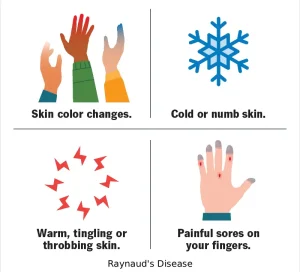
Raynaud’s disease is a condition that affects blood flow to certain parts of the body, most commonly the fingers and toes. It is characterized by episodes of reduced blood circulation in response to cold temperatures or emotional stress. These episodes cause the affected areas to change color, typically turning white or blue before becoming red as blood flow returns. Raynaud’s disease may occur on its own or as part of an underlying medical condition.
Raynaud’s Disease Symptoms
Symptoms usually appear during an episode triggered by cold exposure or stress.
-
Cold or numb fingers and toes
-
Skin color changes from white to blue, then red
-
Tingling, throbbing, or pain as circulation returns
-
Stiffness or clumsiness in affected digits
-
Sensitivity to cold temperatures
-
In severe cases, sores or ulcers on fingertips
Raynaud’s Disease Causes
Raynaud’s disease occurs due to an exaggerated response of blood vessels to certain triggers.
-
Spasm of small blood vessels supplying the skin
-
Exposure to cold environments
-
Emotional stress or anxiety
-
Abnormal regulation of blood vessel tone
-
Reduced blood flow due to vessel constriction
Raynaud’s Disease Risk Factors
Several factors increase the likelihood of developing Raynaud’s disease.
-
Living in colder climates
-
Female sex
-
Younger age at onset, especially between 15 and 30 years
-
Family history of Raynaud’s disease
-
Smoking, which narrows blood vessels
-
Repetitive hand movements or vibration exposure
-
Certain medications that affect blood flow
Raynaud’s Disease Complications
Most cases are mild, but severe or secondary forms can lead to complications.
-
Painful digital ulcers
-
Slow-healing sores on fingers or toes
-
Infections of affected areas
-
Tissue damage due to prolonged lack of blood flow
-
Gangrene in rare, severe cases
Raynaud’s Disease Prevention
Preventive strategies focus on avoiding triggers and protecting circulation.
-
Keeping hands, feet, and body warm
-
Avoiding sudden exposure to cold
-
Wearing gloves and warm clothing in cold weather
-
Managing stress through relaxation techniques
-
Quitting smoking
-
Exercising regularly to improve circulation
-
Avoiding medications that constrict blood vessels
Raynaud’s disease is often manageable with lifestyle adjustments, and early recognition helps reduce discomfort and prevent complications.
Request an appointment
Advertisement
