
Overview
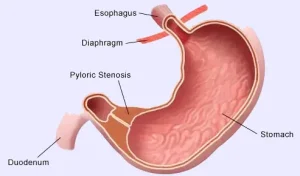
Pyloric Stenosis is a condition in which the pylorus, the muscular valve between the stomach and the small intestine, becomes thickened and narrowed. This narrowing blocks food from passing easily from the stomach into the small intestine. The condition most commonly affects infants, usually developing within the first few weeks after birth.
Because the stomach cannot empty properly, babies with pyloric stenosis often experience forceful vomiting after feeding. Without treatment, the condition can lead to dehydration and poor weight gain. Pyloric stenosis is a serious but treatable condition, and most infants recover fully after appropriate medical care.
Symptoms
Symptoms of pyloric stenosis typically appear between two and eight weeks of age and gradually worsen over time.
Common symptoms include:
-
Forceful or projectile vomiting after feeding
-
Persistent hunger even after vomiting
-
Dehydration
-
Weight loss or poor weight gain
-
Fewer wet diapers
-
Constipation
-
Visible waves of stomach contractions after feeding
-
A small lump in the upper abdomen in some cases
The vomit usually does not contain bile and may occur shortly after feeding.
Causes
The exact cause of pyloric stenosis is not completely understood. It occurs when the muscles of the pylorus become abnormally thick, narrowing the opening between the stomach and the small intestine.
Researchers believe the condition may develop due to a combination of genetic and environmental factors. Abnormal nerve signals or muscle development in the pyloric region may also contribute to the narrowing.
In most cases, the condition develops after birth rather than being present at birth.
Risk Factors
Certain factors may increase the risk of pyloric stenosis in infants.
These include:
-
Family history of pyloric stenosis
-
Male gender, particularly firstborn boys
-
Premature birth
-
Bottle feeding rather than exclusive breastfeeding
-
Exposure to certain antibiotics early in life
-
Smoking during pregnancy
Although these factors may increase risk, pyloric stenosis can occur in infants without any known risk factors.
Complications
If pyloric stenosis is not treated, it can lead to several serious complications.
Possible complications include:
-
Severe dehydration due to repeated vomiting
-
Electrolyte imbalances
-
Poor nutrition and slow growth
-
Weight loss
-
Irritation of the stomach lining
-
Developmental delays related to poor nutrition
Prompt diagnosis and treatment usually prevent these complications.
Prevention
There is no guaranteed way to prevent pyloric stenosis because the exact cause is not fully known. However, awareness of early symptoms can help ensure quick diagnosis and treatment.
Parents and caregivers can take the following steps:
-
Monitor infants for repeated or forceful vomiting
-
Seek medical attention if vomiting becomes frequent or severe
-
Ensure proper hydration and feeding guidance from healthcare providers
-
Follow medical advice if the baby has known risk factors
With early medical care and surgical treatment when necessary, most infants recover quickly and go on to develop normally.
Advertisement
