
Overview
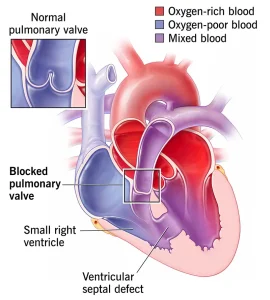
Pulmonary Atresia is a rare congenital heart defect in which the pulmonary valve does not form properly. The pulmonary valve normally allows blood to flow from the right ventricle of the heart to the lungs, where it receives oxygen. In pulmonary atresia, the valve is either missing or completely closed, blocking the normal flow of blood to the lungs.
Because blood cannot reach the lungs through the usual pathway, the body relies on other blood vessels or openings in the heart to supply the lungs with blood. Pulmonary atresia is usually diagnosed shortly after birth and requires prompt medical attention. The severity of the condition can vary depending on how well alternative blood pathways function.
Symptoms
Symptoms of pulmonary atresia typically appear soon after birth and are related to reduced oxygen levels in the body.
Common symptoms include:
-
Bluish discoloration of the skin, lips, or fingernails
-
Rapid or difficult breathing
-
Fatigue or difficulty feeding in infants
-
Poor weight gain
-
Rapid heartbeat
-
Cold or clammy skin
-
Shortness of breath
In severe cases, symptoms may appear immediately after birth and require emergency medical care.
Causes
Pulmonary atresia develops during fetal heart development when the pulmonary valve fails to form normally. As a result, the valve remains closed and prevents blood from flowing from the heart to the lungs.
The exact cause is often unknown, but the condition may be related to genetic factors or problems that affect heart development during pregnancy. Pulmonary atresia may occur alone or alongside other congenital heart defects.
Doctors generally classify pulmonary atresia into two main types based on whether there is a hole in the wall between the ventricles of the heart.
Risk Factors
Certain factors may increase the risk of congenital heart defects such as pulmonary atresia.
These include:
-
Family history of congenital heart disease
-
Genetic disorders affecting heart development
-
Maternal infections during pregnancy
-
Uncontrolled diabetes during pregnancy
-
Exposure to certain medications or harmful substances during pregnancy
-
Smoking or alcohol use during pregnancy
However, many infants with pulmonary atresia are born without any known risk factors.
Complications
If pulmonary atresia is not treated, it can lead to serious health complications.
Possible complications include:
-
Severe oxygen deficiency in the body
-
Heart failure
-
Abnormal heart rhythms
-
Delayed growth and development
-
Increased risk of infections affecting the heart
-
Reduced ability to perform physical activities later in life
Most children with this condition require medical procedures or surgery to improve blood flow to the lungs.
Prevention
Pulmonary atresia cannot always be prevented because it develops during fetal heart formation. However, certain steps during pregnancy may help reduce the risk of congenital heart defects.
Helpful preventive measures include:
-
Receiving regular prenatal care
-
Managing chronic conditions such as diabetes
-
Avoiding alcohol, tobacco, and harmful drugs during pregnancy
-
Taking recommended prenatal vitamins including folic acid
-
Discussing family history of congenital heart defects with a healthcare provider
Early diagnosis and timely treatment can greatly improve survival and long-term outcomes for children born with pulmonary atresia.
Request an appointment
Advertisement
