
Overview
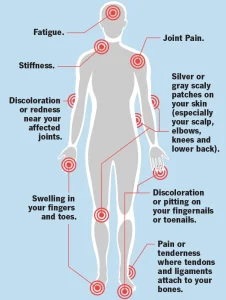
Psoriatic Arthritis is a chronic inflammatory condition that affects the joints and is commonly associated with psoriasis, a skin disorder that causes red, scaly patches. In this condition, the immune system mistakenly attacks healthy joints and tissues, leading to inflammation, pain, and swelling.
Psoriatic arthritis can affect any joint in the body and may range from mild to severe. It often develops in people who already have psoriasis, but in some cases joint symptoms may appear before skin symptoms. Early diagnosis and treatment are important to reduce joint damage and maintain mobility.
Symptoms
The symptoms of psoriatic arthritis can vary from person to person and may come and go in periods known as flare-ups.
Common symptoms include:
-
Joint pain, stiffness, and swelling
-
Morning stiffness that improves with movement
-
Swollen fingers or toes that may appear sausage-shaped
-
Reduced range of motion in affected joints
-
Pain in the feet, especially in the heels or soles
-
Nail changes such as pitting, thickening, or separation from the nail bed
-
Red, scaly skin patches associated with psoriasis
-
Fatigue
Symptoms may affect joints on one or both sides of the body and can worsen over time if not treated.
Causes
The exact cause of psoriatic arthritis is not fully understood. It is believed to result from a combination of genetic and environmental factors that trigger an abnormal immune system response.
In this condition, the immune system attacks healthy joint tissues, causing inflammation and damage. People with psoriasis have a higher risk of developing psoriatic arthritis.
Environmental triggers such as infections, physical injury, or severe stress may also play a role in activating the disease in individuals who are genetically predisposed.
Risk Factors
Several factors may increase the risk of developing psoriatic arthritis.
These include:
-
Having psoriasis
-
Family history of psoriasis or psoriatic arthritis
-
Age between 30 and 50 years
-
Nail psoriasis
-
Certain infections or physical injuries
Although psoriasis is a major risk factor, not everyone with psoriasis will develop joint problems.
Complications
If left untreated, psoriatic arthritis can lead to serious complications.
Possible complications include:
-
Permanent joint damage
-
Reduced mobility and flexibility
-
Chronic pain
-
Deformities in affected joints
-
Eye inflammation
-
Increased risk of heart disease
Early treatment can help control inflammation and prevent long-term joint damage.
Prevention
There is no known way to completely prevent psoriatic arthritis because genetic factors and immune system responses play a major role. However, certain measures may help reduce flare-ups and protect joint health.
Helpful preventive steps include:
-
Managing psoriasis effectively
-
Maintaining a healthy weight
-
Exercising regularly to keep joints flexible
-
Avoiding smoking
-
Managing stress
-
Seeking medical care if joint pain or swelling develops
Early diagnosis and appropriate treatment can significantly improve quality of life and slow the progression of the disease.
Advertisement
