
Overview
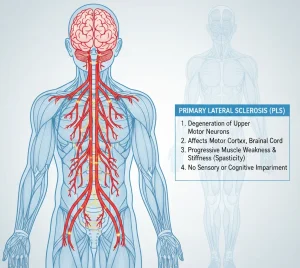
Primary lateral sclerosis (PLS) is a rare neurological disorder that affects the nerve cells responsible for controlling voluntary muscle movement. Specifically, it damages the upper motor neurons in the brain, which send signals to the muscles that allow the body to move. As these nerve cells gradually deteriorate, muscle control becomes increasingly difficult.
PLS progresses slowly and primarily causes muscle stiffness and weakness. Unlike some other motor neuron diseases, it usually does not affect the lower motor neurons, which means muscle wasting is less severe. The condition typically develops in adults and progresses over many years.
Although there is currently no cure for primary lateral sclerosis, treatment focuses on managing symptoms and maintaining mobility and quality of life.
Symptoms
Symptoms of primary lateral sclerosis usually begin gradually and worsen slowly over time. They most often start in the legs and may later spread to other parts of the body.
Common symptoms include:
-
Muscle stiffness or spasticity, especially in the legs
-
Difficulty walking or maintaining balance
-
Muscle weakness
-
Slow or awkward movements
-
Problems with coordination
As the condition progresses, additional symptoms may develop:
-
Difficulty speaking clearly
-
Trouble swallowing
-
Increased muscle reflexes
-
Muscle spasms or cramps
-
Emotional changes such as sudden laughing or crying
Symptoms often develop slowly and may take years to significantly affect daily activities.
Causes
The exact cause of primary lateral sclerosis is not fully understood. The condition involves gradual degeneration of upper motor neurons in the brain, but the underlying reason for this damage is unclear.
Researchers believe that several factors may contribute to the development of the disease, including:
-
Genetic mutations in some rare cases
-
Abnormal protein buildup in nerve cells
-
Environmental or biological factors affecting nerve function
In most cases, PLS occurs sporadically, meaning it develops without a clear inherited pattern.
Risk factors
Certain factors may increase the likelihood of developing primary lateral sclerosis.
-
Age, most commonly occurring between 40 and 60 years
-
Rare genetic forms in families with inherited neurological disorders
-
Possible environmental influences affecting nerve health
However, the condition remains very rare, and many people who develop it have no clear risk factors.
Complications
As primary lateral sclerosis progresses, it can lead to complications related to muscle stiffness and reduced mobility.
Possible complications include:
-
Increasing difficulty with walking and balance
-
Speech and swallowing difficulties
-
Muscle cramps and spasms
-
Reduced mobility and dependence on assistive devices
-
Emotional or psychological stress related to chronic illness
Although PLS progresses slowly, ongoing medical care and physical therapy can help manage symptoms and maintain function.
Prevention
There is currently no known way to prevent primary lateral sclerosis because the exact cause of the disease remains unknown. However, certain measures may help support overall neurological health and manage symptoms effectively.
-
Regular medical monitoring for early detection and symptom management
-
Physical therapy to maintain muscle strength and mobility
-
Speech therapy if communication or swallowing becomes difficult
-
Balanced nutrition and regular exercise suited to individual ability
-
Emotional and psychological support for coping with a chronic condition
Early diagnosis and supportive care can help individuals maintain independence and improve quality of life for many years.
Advertisement
