
Overview
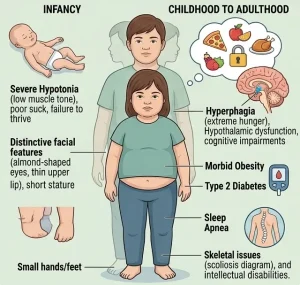
Prader-Willi Syndrome is a rare genetic disorder that affects physical, mental, and behavioral development. It is caused by the loss or malfunction of specific genes on chromosome 15. The condition typically begins in infancy and is characterized by poor muscle tone, feeding difficulties early in life, and later by an increased appetite that can lead to obesity. Prader-Willi Syndrome also affects growth, metabolism, and cognitive development, requiring lifelong medical and supportive care.
Symptoms
Symptoms of Prader-Willi Syndrome change with age and may include:
-
Poor muscle tone (hypotonia) in infancy
-
Weak sucking reflex and feeding difficulties in newborns
-
Delayed growth and developmental milestones
-
Short stature and small hands and feet
-
Increased appetite and chronic overeating beginning in early childhood
-
Rapid weight gain if food intake is not controlled
-
Learning disabilities or mild intellectual impairment
-
Behavioral problems such as stubbornness, temper outbursts, or obsessive behaviors
-
Sleep disturbances and fatigue
Causes
Prader-Willi Syndrome occurs due to abnormalities in genes on chromosome 15:
-
Missing or inactive paternal genes in a specific region of chromosome 15
-
Genetic deletion or uniparental disomy, where both copies of chromosome 15 come from the mother
-
Rare imprinting defects that prevent normal gene expression
These genetic changes disrupt normal regulation of hunger, growth, hormone production, and development.
Risk factors
Most cases of Prader-Willi Syndrome occur randomly, but certain factors may slightly increase risk:
-
Genetic abnormalities affecting chromosome 15
-
Rare familial genetic mutations that affect gene imprinting
-
Advanced parental age has been associated with some genetic abnormalities
Complications
Prader-Willi Syndrome can lead to several long-term complications if not properly managed:
-
Severe obesity due to uncontrolled appetite
-
Type 2 diabetes and metabolic disorders
-
Heart disease related to obesity
-
Sleep apnea and breathing problems
-
Hormonal deficiencies affecting growth and sexual development
-
Behavioral and emotional challenges affecting social functioning
Prevention
Prader-Willi Syndrome cannot be prevented because it is caused by genetic abnormalities. However, early diagnosis and supportive care can improve outcomes:
-
Genetic counseling for families with a history of the disorder
-
Early intervention programs for developmental delays
-
Careful dietary management and supervised food access
-
Growth hormone therapy to support physical development
-
Regular monitoring for obesity-related health conditions
Early diagnosis and coordinated medical care can significantly improve quality of life and help individuals with Prader-Willi Syndrome manage the challenges associated with the condition.
Advertisement
