
Overview
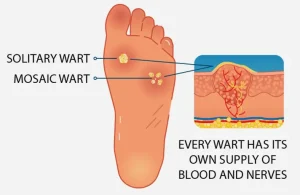
Plantar warts are small, rough growths that appear on the soles of the feet, usually on the heels or balls of the feet where pressure is greatest. They are caused by certain strains of the human papillomavirus (HPV), which enters the body through tiny cuts or breaks in the skin.
Unlike other types of warts, plantar warts grow inward due to the pressure from walking and standing. This can make them painful and uncomfortable, especially when weight is placed on the affected area. In some cases, multiple warts may develop together in clusters, known as mosaic warts.
Plantar warts are common and generally harmless, although they may take time to disappear. Some warts resolve on their own, while others may require treatment to remove them.
Symptoms
Plantar warts have several distinctive features that help distinguish them from other foot conditions.
Common symptoms include:
-
A small, rough growth on the sole of the foot
-
Thickened or hardened skin over the wart
-
A grainy or cauliflower-like surface
-
Tiny black dots within the wart, which are small clotted blood vessels
-
Pain or tenderness when walking or standing
-
A feeling of having a small stone in the shoe
Because they grow inward, plantar warts may appear flattened or covered by a layer of thick skin.
Causes
Plantar warts are caused by infection with certain strains of the human papillomavirus. The virus enters the skin through small cuts, scrapes, or weak areas on the foot.
The virus thrives in warm and moist environments, making places such as swimming pools, locker rooms, and public showers common sources of exposure.
Not everyone who comes into contact with the virus develops warts, as the immune system can sometimes prevent the infection.
Risk Factors
Certain factors can increase the likelihood of developing plantar warts.
Risk factors include:
-
Walking barefoot in public areas such as locker rooms or swimming pools
-
Having small cuts or damaged skin on the feet
-
A weakened immune system
-
Being a child or teenager
-
Frequent exposure to warm, moist environments
People who share footwear or towels with infected individuals may also have a higher risk.
Complications
Plantar warts are usually harmless, but they can cause problems if they become painful or multiply.
Possible complications include:
-
Pain or discomfort while walking or standing
-
Changes in walking posture due to pain
-
Spread of warts to other areas of the foot
-
Development of multiple clustered warts
Persistent or painful warts may require medical treatment.
Prevention
Preventing plantar warts mainly involves protecting the feet from exposure to the virus and maintaining good foot hygiene.
Preventive measures include:
-
Wearing sandals or protective footwear in public showers and locker rooms
-
Keeping feet clean and dry
-
Avoiding direct contact with existing warts
-
Not sharing shoes, socks, or towels
-
Covering cuts or wounds on the feet
-
Changing socks regularly to reduce moisture
Maintaining healthy skin and practicing proper foot care can help reduce the risk of developing plantar warts.
Advertisement
