
Overview
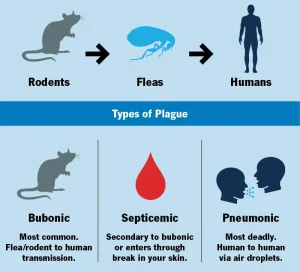
Plague is a serious infectious disease caused by the bacterium Yersinia pestis. It primarily affects animals such as rodents but can spread to humans through the bites of infected fleas or through direct contact with infected animals. Although plague is rare today, it still occurs in some parts of the world.
Historically, plague caused major pandemics, including the Black Death in the 14th century, which resulted in millions of deaths. Today, modern antibiotics can effectively treat the disease if it is diagnosed early.
There are three main forms of plague: bubonic plague, septicemic plague, and pneumonic plague. Each form affects the body differently and varies in severity, but all require prompt medical treatment.
Symptoms
Symptoms of plague usually appear within a few days after exposure to the bacteria and may vary depending on the type of plague.
Common symptoms include:
-
Sudden fever and chills
-
Severe headache
-
Muscle aches
-
Fatigue and weakness
-
Swollen and painful lymph nodes, often in the groin, armpit, or neck
-
Nausea or vomiting
In pneumonic plague, symptoms may also include:
-
Cough
-
Chest pain
-
Difficulty breathing
-
Bloody or watery sputum
Symptoms can progress quickly and may become life-threatening without treatment.
Causes
Plague is caused by the bacterium Yersinia pestis. The bacteria are usually transmitted to humans through the bite of infected fleas that have fed on infected rodents such as rats, mice, or squirrels.
Other ways the infection may spread include:
-
Handling or touching infected animals
-
Being bitten by infected fleas
-
Inhaling respiratory droplets from a person with pneumonic plague
-
Contact with contaminated tissues or body fluids
Once inside the body, the bacteria multiply and spread through the bloodstream or lymphatic system.
Risk Factors
Certain conditions or environments can increase the risk of exposure to plague.
Risk factors include:
-
Living in or traveling to areas where plague occurs
-
Exposure to wild rodents or fleas
-
Handling infected animals
-
Working in occupations that involve animals or wildlife
-
Close contact with someone infected with pneumonic plague
Rural areas with large rodent populations are more likely to have cases of plague.
Complications
Without prompt treatment, plague can cause severe and life-threatening complications.
Possible complications include:
-
Sepsis, a widespread infection in the bloodstream
-
Tissue death due to reduced blood flow
-
Organ failure
-
Severe lung infection in pneumonic plague
-
Shock
These complications can progress rapidly, which is why early treatment with antibiotics is critical.
Prevention
Preventing plague mainly involves reducing exposure to infected animals and fleas.
Preventive measures include:
-
Avoiding contact with wild rodents and their nests
-
Using insect repellent to prevent flea bites
-
Keeping homes and surrounding areas free of rodents
-
Wearing gloves when handling animals
-
Keeping pets free from fleas
-
Seeking medical attention if symptoms appear after exposure to rodents or fleas
Public health monitoring and quick treatment of infected individuals help prevent the spread of plague and protect communities from outbreaks.
Advertisement
