
Overview
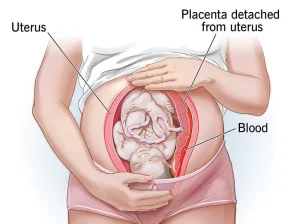
Placental abruption is a serious pregnancy condition in which the placenta partially or completely separates from the inner wall of the uterus before the baby is delivered. The placenta normally provides oxygen and nutrients to the baby during pregnancy. When it separates too early, it can disrupt the baby’s supply of oxygen and nutrients and cause significant bleeding in the mother.
Placental abruption most commonly occurs in the third trimester but can happen at any time after about 20 weeks of pregnancy. The severity of the condition can vary depending on how much of the placenta has separated.
This condition is considered a medical emergency in many cases because it can threaten the health of both the mother and the baby. Prompt medical care is essential to manage symptoms and reduce complications.
Symptoms
Symptoms of placental abruption often appear suddenly and may vary depending on the extent of placental separation.
Common symptoms include:
-
Vaginal bleeding during pregnancy
-
Abdominal or back pain
-
Uterine tenderness
-
Rapid uterine contractions
-
A firm or rigid uterus
-
Decreased fetal movement
-
Signs of premature labor
In some cases, bleeding may be hidden inside the uterus, meaning severe pain may occur even without visible bleeding.
Causes
Placental abruption occurs when the placenta detaches from the uterine wall before childbirth. The exact cause is not always known, but it often involves damage to the blood vessels that connect the placenta to the uterus.
Several conditions or events can contribute to this separation, including trauma to the abdomen or problems with blood vessels in the placenta.
In many cases, placental abruption develops without a clear or preventable cause.
Risk Factors
Certain factors may increase the risk of placental abruption during pregnancy.
Risk factors include:
-
High blood pressure during pregnancy
-
Previous placental abruption
-
Abdominal injury or trauma
-
Smoking during pregnancy
-
Use of certain substances such as cocaine
-
Multiple pregnancies
-
Premature rupture of membranes
-
Maternal age over 35 years
Women who have experienced placental abruption in a previous pregnancy may have a higher risk in future pregnancies.
Complications
Placental abruption can lead to serious complications for both the mother and the baby.
Possible complications include:
-
Severe bleeding in the mother
-
Premature birth
-
Low birth weight in the baby
-
Oxygen deprivation to the baby
-
Blood clotting problems in the mother
-
Stillbirth in severe cases
The severity of complications depends on how much of the placenta has separated and how quickly treatment is provided.
Prevention
Placental abruption cannot always be prevented, but certain steps may help reduce risk factors and support a healthy pregnancy.
Preventive measures include:
-
Receiving regular prenatal care
-
Managing high blood pressure during pregnancy
-
Avoiding smoking and harmful substances
-
Wearing a seat belt properly to protect the abdomen during travel
-
Seeking medical attention after any abdominal injury during pregnancy
-
Following medical guidance for pregnancy-related health conditions
Early medical care and careful monitoring during pregnancy can help identify potential risks and improve outcomes for both mother and baby.
Advertisement
