
Overview
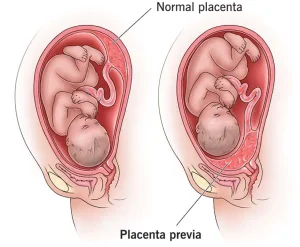
Placenta previa is a pregnancy condition in which the placenta partially or completely covers the cervix, the opening of the uterus that leads to the birth canal. The placenta normally attaches higher in the uterus, allowing the baby to pass through the cervix during delivery. In placenta previa, the placenta blocks or lies very close to the cervical opening.
This condition can cause bleeding during pregnancy, particularly in the second or third trimester. The bleeding may occur without pain and can range from mild to severe. Placenta previa can make vaginal delivery difficult or dangerous because the placenta blocks the baby’s exit from the uterus.
With proper monitoring and medical care, many pregnancies with placenta previa can be managed safely. In many cases, delivery is planned by cesarean section to reduce the risk of complications.
Symptoms
The most common symptom of placenta previa is painless vaginal bleeding during the second half of pregnancy.
Common symptoms include:
-
Bright red vaginal bleeding during the second or third trimester
-
Bleeding that may start suddenly without pain
-
Bleeding after physical activity or sexual intercourse
-
Repeated episodes of bleeding during pregnancy
Some women may not experience symptoms, and the condition may be discovered during routine prenatal ultrasound examinations.
Causes
Placenta previa occurs when the placenta attaches to the lower part of the uterus near or over the cervix. As the uterus grows during pregnancy, the placenta may remain in this lower position instead of moving upward.
The exact reason this happens is not always known. In some cases, it may be related to changes in the uterine lining or areas of previous uterine scarring where the placenta attaches.
As the cervix begins to thin and open later in pregnancy, the placenta can tear slightly from the uterine wall, leading to bleeding.
Risk Factors
Certain factors may increase the likelihood of placenta previa during pregnancy.
Risk factors include:
-
Previous cesarean delivery
-
Previous placenta previa
-
Multiple pregnancies
-
Carrying twins or multiple babies
-
Previous uterine surgery
-
Maternal age over 35 years
-
Smoking during pregnancy
-
Abnormal shape of the uterus
Women with uterine scarring from past surgeries may have a higher risk of the placenta attaching in the lower uterus.
Complications
Placenta previa can lead to serious complications if not carefully managed.
Possible complications include:
-
Severe bleeding during pregnancy
-
Premature birth
-
Heavy bleeding during delivery
-
Increased need for cesarean delivery
-
Low birth weight in the baby
-
Increased risk of placenta accreta in some cases
Severe bleeding may require hospitalization or emergency medical care.
Prevention
Placenta previa cannot always be prevented because the exact cause is often unknown. However, certain steps may help reduce some risk factors.
Preventive measures include:
-
Attending regular prenatal checkups
-
Avoiding smoking during pregnancy
-
Managing pregnancy health conditions carefully
-
Limiting unnecessary uterine procedures when possible
-
Following medical advice if placenta previa is diagnosed
Early detection through prenatal ultrasound allows doctors to monitor the condition closely and plan a safe delivery.
Advertisement
