
Overview
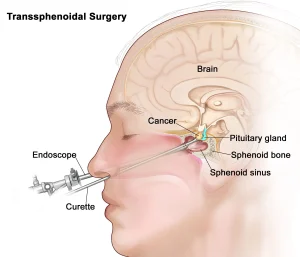
Pituitary tumors are abnormal growths that develop in the pituitary gland, a small gland located at the base of the brain. The pituitary gland plays a vital role in regulating many hormones that control important body functions such as growth, metabolism, reproduction, and stress response.
Most pituitary tumors are benign, meaning they are not cancerous and do not spread to other parts of the body. However, they can still cause significant health problems by producing excessive hormones or by pressing on nearby structures in the brain.
Depending on the type of tumor, pituitary tumors may either release too much hormone, interfere with normal hormone production, or remain inactive but cause symptoms due to their size. Early diagnosis and proper treatment can help manage symptoms and restore hormonal balance.
Symptoms
Symptoms of pituitary tumors depend on whether the tumor produces hormones and whether it presses on nearby brain structures.
Common symptoms may include:
-
Frequent headaches
-
Vision problems, especially loss of peripheral vision
-
Nausea or vomiting
-
Fatigue or weakness
-
Unexplained weight changes
-
Changes in menstrual cycles in women
-
Erectile dysfunction or reduced libido in men
-
Infertility
-
Unusual growth of hands, feet, or facial features
-
Milk production from the breasts not related to childbirth
Large tumors may press on the optic nerves, leading to vision problems or loss of visual field.
Causes
The exact cause of most pituitary tumors is not known. They develop when cells in the pituitary gland begin to grow uncontrollably and form a tumor.
In some cases, genetic mutations may contribute to abnormal cell growth. Rarely, pituitary tumors may be associated with inherited conditions that increase the risk of endocrine tumors.
However, for most individuals, no clear cause can be identified.
Risk Factors
Although pituitary tumors can occur in anyone, certain factors may increase the likelihood of developing them.
Risk factors include:
-
Family history of pituitary tumors
-
Genetic conditions affecting hormone-producing glands
-
Certain inherited endocrine disorders
-
Middle adulthood, although tumors can occur at any age
People with inherited endocrine syndromes may have a higher risk of developing pituitary tumors.
Complications
If pituitary tumors grow large or disrupt hormone production, they can lead to several complications.
Possible complications include:
-
Hormonal imbalances affecting multiple body systems
-
Vision loss due to pressure on the optic nerves
-
Infertility
-
Bone thinning caused by hormone abnormalities
-
Chronic headaches
-
Pituitary gland failure, leading to reduced hormone production
These complications can often be managed with medical treatment, surgery, or hormone therapy.
Prevention
There is no known way to prevent most pituitary tumors because their exact cause is not fully understood. However, early detection can help prevent complications and improve treatment outcomes.
Helpful steps include:
-
Seeking medical evaluation for persistent headaches or vision problems
-
Monitoring unexplained hormonal symptoms
-
Undergoing regular medical checkups if there is a family history of endocrine disorders
-
Genetic counseling for individuals with inherited conditions linked to endocrine tumors
Early diagnosis and proper medical care can help manage pituitary tumors effectively and reduce the risk of long-term complications.
Request an appointment
Advertisement
