
Overview
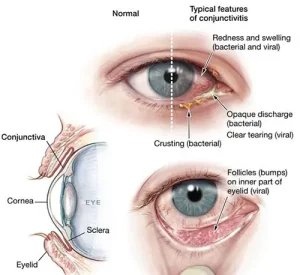
Pink eye, also known as conjunctivitis, is an inflammation or infection of the conjunctiva, the thin transparent membrane that covers the white part of the eye and lines the inner surface of the eyelids. When the small blood vessels in the conjunctiva become irritated or inflamed, they become more visible, giving the eye a pink or reddish appearance.
Conjunctivitis can affect one or both eyes and is a common eye condition in both children and adults. It may be caused by infections, allergies, or irritation from chemicals or foreign substances. Some forms of conjunctivitis are highly contagious, especially those caused by viruses or bacteria.
Although pink eye is usually mild, proper diagnosis is important to determine the cause and ensure appropriate treatment.
Symptoms
Symptoms of pink eye can vary depending on the cause but generally affect the surface of the eye and surrounding tissues.
Common symptoms include:
-
Red or pink discoloration of the white part of the eye
-
Itching or irritation in the eyes
-
Increased tearing
-
A gritty or sandy feeling in the eye
-
Discharge that may form a crust during sleep
-
Swollen eyelids
-
Sensitivity to light
-
Blurred vision that improves after wiping the eyes
In bacterial conjunctivitis, the discharge may be thick and yellow or green, while allergic conjunctivitis often causes intense itching.
Causes
Pink eye can develop from several different causes that irritate or infect the conjunctiva.
Common causes include:
-
Viral infections, often associated with colds or respiratory infections
-
Bacterial infections
-
Allergic reactions to pollen, dust, or pet dander
-
Irritants such as smoke, chemicals, or chlorine
-
Contact lens use, especially if lenses are not cleaned properly
-
Foreign objects in the eye
Identifying the underlying cause helps determine the most effective treatment.
Risk Factors
Certain factors may increase the likelihood of developing conjunctivitis.
Risk factors include:
-
Exposure to someone with viral or bacterial conjunctivitis
-
Seasonal allergies
-
Contact lens use, especially extended wear lenses
-
Poor hand hygiene
-
Exposure to irritants such as smoke or chemical fumes
-
Crowded environments like schools or daycare centers
People who frequently touch their eyes without washing their hands may also have a higher risk of infection.
Complications
Most cases of pink eye resolve without serious problems, but complications can occur in certain situations.
Possible complications include:
-
Spread of infection to others
-
Persistent eye irritation or discomfort
-
Corneal inflammation in severe infections
-
Vision problems if the cornea becomes affected
Prompt treatment and proper hygiene can reduce the risk of these complications.
Prevention
Preventing pink eye mainly involves good hygiene and avoiding exposure to irritants or infected individuals.
Preventive measures include:
-
Washing hands frequently and thoroughly
-
Avoiding touching or rubbing the eyes
-
Not sharing towels, makeup, or eye care products
-
Properly cleaning and storing contact lenses
-
Replacing old eye cosmetics regularly
-
Protecting the eyes from dust, smoke, and chemical irritants
Practicing good eye hygiene and avoiding close contact with infected individuals can significantly reduce the risk of developing conjunctivitis.
Advertisement
