
Overview
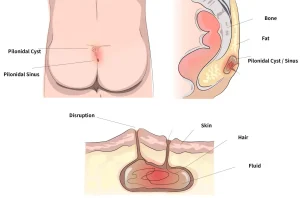
A pilonidal cyst is a fluid-filled sac that develops under the skin, usually near the tailbone at the top of the crease between the buttocks. It often contains hair, skin debris, and other tissue. Pilonidal cysts can become infected and form painful abscesses that may drain pus or blood.
This condition most commonly affects young adults and is seen more often in men than in women. It can cause discomfort when sitting, walking, or performing daily activities. In some cases, the cyst may remain small and painless, while in others it can repeatedly become infected.
Pilonidal cysts can be treated with medications, drainage procedures, or surgery depending on the severity of the condition and whether infections occur frequently.
Symptoms
Symptoms of a pilonidal cyst often appear when the cyst becomes infected. Mild cases may cause little or no discomfort until infection develops.
Common symptoms include:
-
Pain or tenderness near the tailbone
-
Swelling or redness in the area
-
A small lump or cyst near the crease of the buttocks
-
Drainage of pus or blood from the cyst
-
Foul-smelling discharge
-
Fever in cases of severe infection
-
Pain that worsens when sitting or moving
Some people may notice small openings or pits in the skin where fluid may drain.
Causes
The exact cause of pilonidal cysts is not always clear, but they are often linked to hair that penetrates the skin. When loose hairs become trapped in the skin, the body may treat them as foreign objects, leading to inflammation and cyst formation.
Contributing factors may include:
-
Friction and pressure in the tailbone area
-
Ingrown hairs
-
Prolonged sitting
-
Tight clothing that irritates the skin
-
Excess body hair
Over time, the trapped hair and debris can lead to infection and the formation of a painful abscess.
Risk Factors
Certain factors may increase the likelihood of developing a pilonidal cyst.
Risk factors include:
-
Being a young adult, especially between the ages of 15 and 35
-
Male gender
-
Thick or coarse body hair
-
Prolonged sitting or sedentary lifestyle
-
Obesity
-
Poor hygiene in the affected area
-
Family history of pilonidal disease
Occupations that require long periods of sitting may also increase the risk.
Complications
If a pilonidal cyst is not treated or becomes repeatedly infected, complications can occur.
Possible complications include:
-
Recurrent infections or abscesses
-
Chronic drainage from the cyst
-
Formation of multiple sinus tracts under the skin
-
Severe pain and discomfort
-
Rarely, long-term untreated cysts may lead to skin changes
Repeated infections often require surgical treatment to remove the cyst completely.
Prevention
While pilonidal cysts cannot always be prevented, certain steps may help reduce the risk of developing or recurring infections.
Preventive measures include:
-
Keeping the area around the tailbone clean and dry
-
Removing excess hair from the area if recommended by a healthcare provider
-
Avoiding prolonged sitting whenever possible
-
Maintaining a healthy body weight
-
Wearing loose-fitting clothing to reduce friction
-
Practicing good hygiene and regular bathing
Early treatment of irritation or infection in the area can help prevent a small cyst from developing into a more serious condition.
Advertisement
