
Overview
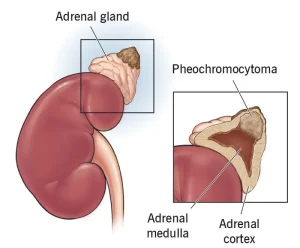
Pheochromocytoma is a rare tumor that develops in the adrenal glands, which are small glands located on top of each kidney. These tumors arise from specialized cells that produce hormones called catecholamines, including adrenaline and noradrenaline. These hormones play a key role in regulating blood pressure, heart rate, and the body’s response to stress.
Most pheochromocytomas are noncancerous, but they can cause serious health problems because they release excessive amounts of hormones. This sudden or continuous hormone release can lead to dangerously high blood pressure and other symptoms that may occur in episodes.
Although pheochromocytoma is uncommon, it is an important condition to diagnose because untreated hormone surges can lead to severe complications. Early detection and proper treatment, often involving surgery, usually lead to good outcomes.
Symptoms
Symptoms of pheochromocytoma are often caused by the release of large amounts of stress hormones. These symptoms may occur suddenly in episodes that can last from minutes to hours.
Common symptoms include:
-
High blood pressure that may be persistent or occur in sudden spikes
-
Severe headaches
-
Rapid or irregular heartbeat
-
Excessive sweating
-
Tremors or shaking
-
Anxiety or panic-like feelings
-
Pale skin
-
Shortness of breath
-
Nausea or abdominal pain
-
Unexplained weight loss
Some people may experience sudden attacks of symptoms triggered by physical activity, stress, certain medications, or changes in body position.
Causes
Pheochromocytoma develops when certain cells in the adrenal gland grow abnormally and form a tumor. These cells produce hormones that regulate the body’s response to stress.
In many cases, the exact cause is not known. However, some pheochromocytomas are associated with inherited genetic syndromes that increase the likelihood of tumor formation.
These tumors may occur in one or both adrenal glands, and in rare cases, similar tumors can develop outside the adrenal glands in nerve tissue.
Risk Factors
Certain inherited conditions and genetic mutations can increase the risk of developing pheochromocytoma.
Risk factors include:
-
Family history of pheochromocytoma
-
Genetic syndromes that affect hormone-producing glands
-
Certain inherited tumor syndromes
-
Younger age at diagnosis in some hereditary cases
Individuals with inherited syndromes may develop pheochromocytoma at an earlier age and may have tumors in both adrenal glands.
Complications
If pheochromocytoma is not treated, the excessive hormone release can lead to serious complications.
Possible complications include:
-
Severe or persistent high blood pressure
-
Heart disease or irregular heart rhythms
-
Stroke
-
Heart attack
-
Damage to organs such as the heart and kidneys
-
Life-threatening spikes in blood pressure
Proper medical treatment can help control hormone levels and prevent these complications.
Prevention
Because pheochromocytoma is often linked to genetic factors, it cannot always be prevented. However, early detection and monitoring can help reduce the risk of serious complications.
Preventive approaches may include:
-
Genetic counseling and testing for individuals with a family history of related conditions
-
Regular medical checkups for people at higher genetic risk
-
Monitoring blood pressure and unexplained symptoms
-
Seeking medical evaluation for recurring episodes of headaches, sweating, and rapid heartbeat
Early diagnosis and treatment can significantly improve outcomes and reduce the risk of complications associated with pheochromocytoma.
Request an appointment
Advertisement
