
Overview
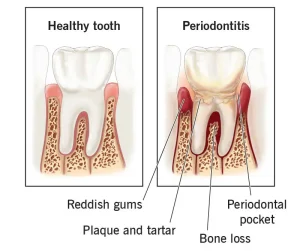
Periodontitis is a serious gum infection that damages the soft tissue and can destroy the bone that supports the teeth. It usually develops from untreated gingivitis, a milder form of gum disease. If not treated properly, periodontitis can lead to tooth loosening or tooth loss.
The condition occurs when bacteria accumulate in dental plaque and cause inflammation in the gums. Over time, this infection can spread below the gum line and damage the tissues and bone that hold the teeth in place. Periodontitis is a common condition but can often be prevented with proper oral hygiene and regular dental care.
Symptoms
Symptoms of periodontitis may develop gradually and can vary depending on the severity of the infection.
Common symptoms include:
-
Swollen or puffy gums
-
Bright red or dark red gums
-
Gums that bleed easily during brushing or flossing
-
Persistent bad breath
-
Receding gums that make teeth appear longer
-
Formation of deep pockets between the teeth and gums
-
Loose or shifting teeth
-
Pain when chewing
-
Changes in the way teeth fit together when biting
In advanced stages, the supporting structures of the teeth may become severely damaged.
Causes
Periodontitis is mainly caused by the buildup of bacterial plaque on the teeth and gums. Plaque is a sticky film that forms on teeth when bacteria combine with food particles and saliva.
If plaque is not removed by brushing and flossing, it can harden into tartar, which allows bacteria to multiply and spread below the gum line. This bacterial infection causes inflammation and gradual damage to gum tissue and bone.
Other contributing causes may include poor oral hygiene, smoking, and certain medical conditions that affect the immune system.
Risk Factors
Several factors can increase the risk of developing periodontitis.
These include:
-
Poor oral hygiene habits
-
Smoking or tobacco use
-
Diabetes
-
Hormonal changes such as those during pregnancy or menopause
-
Certain medications that reduce saliva flow
-
Genetic susceptibility to gum disease
-
Poor nutrition
-
Conditions that weaken the immune system
These risk factors can make it easier for bacteria to cause gum infection and tissue damage.
Complications
If periodontitis is left untreated, it can lead to serious oral and overall health problems.
Possible complications include:
-
Tooth loss
-
Damage to the jawbone
-
Gum abscesses
-
Increased tooth sensitivity
-
Difficulty chewing
-
Changes in tooth alignment
Research also suggests that severe gum disease may be associated with other health conditions such as heart disease, diabetes complications, and respiratory infections.
Prevention
Periodontitis can often be prevented through good oral hygiene and regular dental care.
Preventive measures may include:
-
Brushing teeth at least twice a day with fluoride toothpaste
-
Flossing daily to remove plaque between teeth
-
Visiting the dentist regularly for checkups and professional cleanings
-
Avoiding tobacco products
-
Eating a balanced diet that supports oral health
-
Treating early signs of gum disease promptly
Maintaining consistent oral hygiene habits and seeking regular dental care can help protect the gums and prevent the development of periodontitis.
Advertisement
