
Overview
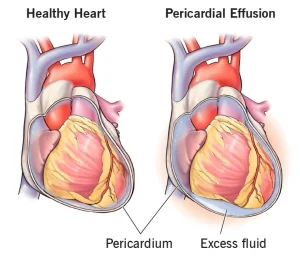
Pericardial effusion is a condition in which excess fluid accumulates in the pericardial cavity, the space between the heart and the pericardium, which is the thin sac that surrounds the heart. Normally, a small amount of fluid is present in this space to reduce friction as the heart beats. However, when too much fluid builds up, it can put pressure on the heart and affect its ability to pump blood effectively.
Pericardial effusion may develop gradually or suddenly, depending on the underlying cause. In mild cases, it may cause few symptoms and be detected only during imaging tests. In more severe cases, the pressure from the fluid can interfere with heart function and lead to serious complications that require immediate medical attention.
Symptoms
The symptoms of pericardial effusion depend on the amount of fluid present and how quickly it accumulates. Some people may have no symptoms, especially if the fluid builds up slowly.
Common symptoms include:
-
Shortness of breath, especially when lying down
-
Chest pain or discomfort
-
Fatigue or weakness
-
Swelling in the abdomen or legs
-
Rapid heartbeat
-
Cough
-
Feeling of fullness or pressure in the chest
In severe cases, symptoms may worsen rapidly and may include dizziness, fainting, or severe difficulty breathing.
Causes
Pericardial effusion can occur due to several medical conditions that cause inflammation, injury, or disease affecting the pericardium.
Common causes include:
-
Inflammation of the pericardium known as pericarditis
-
Viral, bacterial, or fungal infections
-
Cancer that spreads to the pericardium
-
Kidney failure
-
Autoimmune diseases such as lupus or rheumatoid arthritis
-
Chest injury or trauma
-
Complications after heart surgery
-
Certain medications
Sometimes the exact cause cannot be identified.
Risk Factors
Certain factors may increase the likelihood of developing pericardial effusion.
These include:
-
History of heart disease or pericarditis
-
Autoimmune disorders
-
Cancer affecting the chest area
-
Chronic kidney disease
-
Severe infections
-
Recent heart surgery
-
Chest injuries
People with these conditions may require monitoring for possible fluid accumulation around the heart.
Complications
If pericardial effusion becomes severe or untreated, it can lead to serious complications.
Possible complications include:
-
Cardiac tamponade, a life-threatening condition in which pressure on the heart prevents normal pumping
-
Reduced blood flow to vital organs
-
Heart failure
-
Chronic inflammation of the pericardium
-
Recurrent fluid buildup around the heart
Prompt diagnosis and treatment are important to prevent these complications.
Prevention
Prevention of pericardial effusion focuses on managing underlying conditions that may cause inflammation or fluid buildup around the heart.
Preventive measures may include:
-
Treating infections promptly
-
Managing chronic diseases such as kidney disease or autoimmune disorders
-
Following medical advice after heart surgery or chest injury
-
Regular medical monitoring for individuals with heart or inflammatory conditions
-
Maintaining overall cardiovascular health through a healthy lifestyle
Early medical evaluation of symptoms such as persistent chest discomfort or shortness of breath can help detect the condition before serious complications develop.
Request an appointment
Advertisement
