
Overview
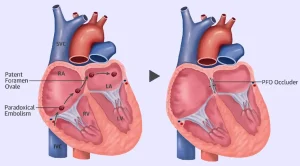
Patent Foramen Ovale (PFO) is a common heart condition in which a small opening between the upper chambers of the heart does not close completely after birth. The foramen ovale is a normal opening in the fetal heart that allows blood to bypass the lungs before birth, since the fetus receives oxygen from the placenta. After birth, this opening normally closes as the lungs begin functioning.
In some individuals, the opening remains partially open, which is known as a Patent Foramen Ovale. In many cases, PFO causes no symptoms and may remain undetected for years. It is often discovered incidentally during heart imaging tests performed for other reasons. Most people with PFO live normal lives without significant health problems.
Symptoms
Many people with Patent Foramen Ovale do not experience noticeable symptoms. When symptoms occur, they are often related to complications caused by abnormal blood flow between the atria.
Possible symptoms may include:
-
Shortness of breath
-
Fatigue during physical activity
-
Migraine headaches, sometimes with aura
-
Dizziness or lightheadedness
-
Temporary numbness or weakness caused by reduced blood flow to the brain
In many cases, the condition is discovered only after an evaluation for unexplained stroke or other cardiovascular issues.
Causes
Patent Foramen Ovale occurs when the flap-like opening between the right and left atria of the heart does not fully seal after birth. During fetal development, the foramen ovale allows blood to pass from the right atrium to the left atrium without going through the lungs.
After birth, increased blood pressure in the left atrium usually pushes the flap closed and seals the opening. In some individuals, the flap does not seal completely, leaving a small passage that can occasionally allow blood to move between the atria.
The exact reason why the opening fails to close completely in some people is not fully understood.
Risk Factors
Patent Foramen Ovale is relatively common and occurs in a significant portion of the population. Certain factors may be associated with a higher likelihood of the condition or related complications.
These include:
-
Family history of heart abnormalities
-
Presence of other congenital heart defects
-
Conditions that increase pressure in the chest, such as chronic lung disease
-
History of unexplained stroke, particularly in younger adults
-
Migraine headaches with aura
Although these factors may be linked to PFO, many individuals with the condition have no identifiable risk factors.
Complications
While most cases of Patent Foramen Ovale are harmless, complications can occur in some individuals.
Possible complications include:
-
Cryptogenic stroke, which is a stroke with no clearly identified cause
-
Transient ischemic attack, sometimes called a mini-stroke
-
Migraine headaches
-
Reduced oxygen levels in rare situations
-
Decompression illness in deep-sea divers
The likelihood of complications depends on the size of the opening and whether abnormal blood clots pass through the heart.
Prevention
There is no known way to prevent Patent Foramen Ovale because it is related to natural variations in heart development before birth. However, certain steps may help reduce the risk of complications.
Preventive approaches may include:
-
Managing risk factors for stroke, such as high blood pressure or smoking
-
Following medical advice if a PFO is discovered during heart evaluation
-
Taking prescribed medications to prevent blood clots if recommended
-
Avoiding activities that may increase the risk of decompression illness in certain individuals
-
Maintaining regular medical checkups to monitor heart health
Early medical evaluation and appropriate management can help reduce the risk of complications associated with Patent Foramen Ovale.
Advertisement
