
Overview
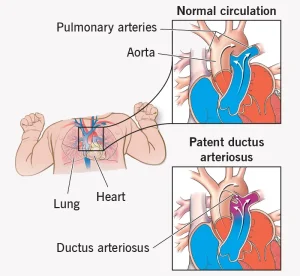
Patent Ductus Arteriosus (PDA) is a congenital heart condition in which a blood vessel called the ductus arteriosus fails to close after birth. During fetal development, this vessel connects the pulmonary artery to the aorta and allows blood to bypass the lungs, since the fetus receives oxygen from the placenta. Normally, the ductus arteriosus closes shortly after birth when the newborn begins breathing independently.
When the ductus arteriosus remains open, or “patent,” blood can flow abnormally between the aorta and the pulmonary artery. This extra blood flow can place strain on the heart and lungs. Small PDAs may cause few or no symptoms, while larger ones can lead to breathing difficulties, poor growth, and other complications if not treated.
Symptoms
The symptoms of Patent Ductus Arteriosus depend on the size of the opening and the amount of abnormal blood flow. Small PDAs may not cause noticeable symptoms and may only be detected during a routine medical examination.
Possible symptoms include:
-
Rapid or difficult breathing
-
Fatigue, especially during feeding in infants
-
Poor feeding and slow weight gain
-
Frequent respiratory infections
-
Sweating during feeding or activity
-
Rapid heartbeat
-
Shortness of breath during physical activity in older children
A characteristic heart murmur is often heard during a medical examination.
Causes
Patent Ductus Arteriosus occurs when the ductus arteriosus does not close properly after birth. The exact reason for this failure is not always known. The condition is present at birth and results from changes in the normal process of heart and blood vessel adaptation after delivery.
Normally, increased oxygen levels and changes in blood circulation after birth trigger the ductus arteriosus to close. If this process does not occur, the vessel remains open and allows abnormal blood flow between the aorta and pulmonary artery.
In some cases, PDA may occur along with other congenital heart defects.
Risk Factors
Certain factors may increase the likelihood of a baby being born with Patent Ductus Arteriosus.
These include:
-
Premature birth
-
Low birth weight
-
Family history of congenital heart defects
-
Maternal infection with certain viruses during pregnancy, such as rubella
-
Being female, as PDA is more common in girls
-
Living at high altitude, which may influence oxygen levels after birth
Although these factors may increase risk, many cases occur without a clear cause.
Complications
If a significant PDA remains untreated, it can lead to complications over time due to the increased workload on the heart and lungs.
Possible complications include:
-
Pulmonary hypertension, which is high blood pressure in the lung arteries
-
Heart enlargement
-
Heart failure in severe cases
-
Increased risk of infective endocarditis, an infection of the heart lining
-
Poor growth and development in infants
Early diagnosis and treatment can help prevent these complications and support normal heart function.
Prevention
Because Patent Ductus Arteriosus is a congenital condition, it cannot always be prevented. However, certain measures during pregnancy may help support healthy fetal development.
Preventive steps may include:
-
Receiving regular prenatal care during pregnancy
-
Getting recommended vaccinations before or during pregnancy when appropriate
-
Avoiding alcohol, tobacco, and harmful drugs during pregnancy
-
Managing chronic health conditions under medical supervision
-
Avoiding exposure to infections that may affect fetal development
Early medical evaluation of newborns and infants with heart murmurs or symptoms can help ensure timely diagnosis and treatment.
Advertisement
