
Overview
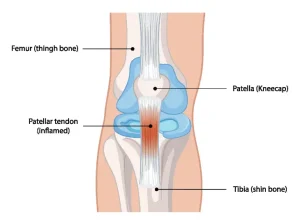
Patellar tendinitis, also known as jumper’s knee, is a condition that involves inflammation or irritation of the patellar tendon. This tendon connects the kneecap (patella) to the shinbone (tibia) and plays an important role in helping the leg straighten during activities such as walking, running, and jumping.
The condition commonly affects athletes who participate in sports that involve frequent jumping or sudden changes in direction, such as basketball, volleyball, and track events. Repeated stress on the patellar tendon can lead to small tears and inflammation, causing pain and reduced knee function. While it is most common in athletes, anyone who places repeated strain on the knee can develop patellar tendinitis.
Symptoms
The main symptom of patellar tendinitis is pain around the patellar tendon, typically just below the kneecap. The discomfort may start mild and gradually worsen with continued activity.
Common symptoms include:
-
Pain or tenderness just below the kneecap
-
Knee pain that worsens during jumping, running, or climbing stairs
-
Stiffness in the knee, especially after periods of inactivity
-
Swelling around the lower part of the kneecap
-
Weakness in the affected leg
-
Difficulty straightening the knee during severe cases
Symptoms often begin during or after physical activity and may become constant if the condition progresses.
Causes
Patellar tendinitis develops due to repeated stress on the patellar tendon. Continuous strain can cause microscopic tears in the tendon, leading to inflammation and pain.
Common causes include:
-
Repetitive jumping or running activities
-
Sudden increase in training intensity or frequency
-
Tight leg muscles that increase tension on the tendon
-
Poor athletic technique
-
Inadequate warm-up before exercise
-
Weak thigh muscles that place extra strain on the tendon
Over time, repeated injury and insufficient recovery can lead to chronic tendon damage.
Risk Factors
Certain factors may increase the likelihood of developing patellar tendinitis.
These include:
-
Participation in sports that involve jumping or rapid movements
-
Tight quadriceps or hamstring muscles
-
Muscle imbalances in the legs
-
Hard playing surfaces
-
Improper footwear
-
Sudden increases in physical activity levels
-
Poor flexibility or inadequate conditioning
Athletes and individuals with physically demanding routines are more likely to develop this condition.
Complications
If patellar tendinitis is not properly treated, it may lead to ongoing problems that affect knee function.
Possible complications include:
-
Chronic knee pain
-
Weakness in the knee and surrounding muscles
-
Limited mobility or reduced athletic performance
-
Degeneration of the patellar tendon
-
Increased risk of tendon rupture in severe cases
Early treatment and proper rest can help prevent long-term damage to the tendon.
Prevention
Taking steps to protect the knee and reduce excessive strain on the patellar tendon can help prevent patellar tendinitis.
Preventive measures may include:
-
Warming up properly before exercise or sports
-
Gradually increasing the intensity of physical activities
-
Strengthening the thigh and leg muscles
-
Stretching the quadriceps and hamstrings regularly
-
Using proper sports techniques
-
Wearing supportive footwear suitable for the activity
-
Allowing adequate rest and recovery between intense workouts
Maintaining good physical conditioning and listening to the body’s warning signs can reduce the risk of developing this condition.
Advertisement
