
Overview
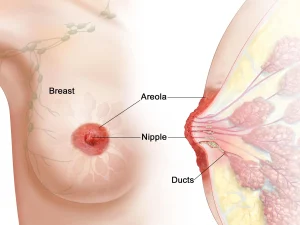
Paget’s Disease of the Breast is a rare type of breast cancer that affects the skin of the nipple and often the darker area surrounding it, known as the areola. It usually appears as eczema-like changes on the nipple and may be associated with an underlying breast tumor, such as ductal carcinoma in situ (DCIS) or invasive breast cancer. This condition most commonly occurs in women over the age of 50, although it can also occur in men. Because its symptoms may resemble common skin conditions, it is sometimes misdiagnosed or diagnosed later than other types of breast cancer.
Symptoms
Symptoms of Paget’s Disease of the Breast typically begin at the nipple and may spread to the areola. They can include:
-
Redness, irritation, or flaky skin on the nipple and areola
-
Itching or burning sensation in the nipple area
-
Thickened or crusty skin around the nipple
-
Nipple discharge, which may be yellowish or bloody
-
Flattened or inverted nipple
-
Pain or sensitivity in the nipple region
-
A lump or thickening in the breast tissue in some cases
These symptoms may appear intermittently and can sometimes improve temporarily with topical treatments, which may delay proper diagnosis.
Causes
The exact cause of Paget’s Disease of the Breast is not completely understood. However, the most widely accepted explanation is that cancer cells from an underlying breast tumor travel through the milk ducts to the nipple and affect the skin surface. Another theory suggests that cells in the nipple itself may become cancerous independently, although this is considered less common.
Most cases of Paget’s disease are associated with an underlying form of breast cancer, particularly ductal carcinoma in situ or invasive ductal carcinoma.
Risk Factors
Several factors may increase the likelihood of developing Paget’s Disease of the Breast. These risk factors are similar to those for other types of breast cancer.
-
Age over 50 years
-
Personal history of breast cancer
-
Family history of breast cancer
-
Genetic mutations such as BRCA1 or BRCA2
-
Dense breast tissue
-
Obesity
-
Exposure to radiation therapy in the chest area earlier in life
-
Hormonal factors, including long-term estrogen exposure
Although these factors may increase risk, Paget’s disease can also occur in people without any known risk factors.
Complications
If not diagnosed and treated early, Paget’s Disease of the Breast can lead to several complications.
-
Spread of cancer to surrounding breast tissue
-
Development of invasive breast cancer
-
Spread of cancer to nearby lymph nodes
-
Metastasis to other organs in advanced stages
-
Emotional and psychological stress related to cancer diagnosis and treatment
Early detection and treatment significantly improve outcomes.
Prevention
There is no guaranteed way to prevent Paget’s Disease of the Breast, but certain steps may help reduce the risk or aid in early detection.
-
Perform regular breast self-examinations to notice any changes in the nipple or breast tissue
-
Schedule routine clinical breast exams and mammograms as recommended by a healthcare provider
-
Maintain a healthy body weight and balanced diet
-
Limit alcohol consumption
-
Stay physically active
-
Seek medical evaluation for any persistent nipple changes, irritation, or unusual discharge
Prompt medical attention for nipple abnormalities can help ensure early diagnosis and effective treatment.
Advertisement
