
Overview
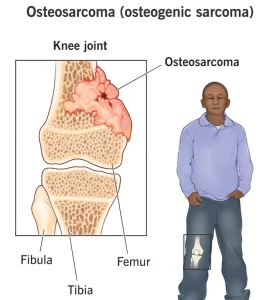
Osteosarcoma is a rare but aggressive type of bone cancer that typically develops in the long bones, such as the arms, legs, or near the knees. It primarily affects children, adolescents, and young adults. Osteosarcoma arises from immature bone-forming cells and can spread (metastasize) to other parts of the body, most commonly the lungs. Early diagnosis and treatment are critical for improving outcomes.
Symptoms
Symptoms of osteosarcoma often develop gradually and may be mistaken for normal growth-related pain:
-
Persistent bone pain, often worsening at night or with activity
-
Swelling or tenderness near a joint or bone
-
Reduced joint movement
-
Limping if the leg is affected
-
Fractures in the affected bone due to weakening
-
Fatigue or general feeling of unwellness in advanced cases
Causes
The exact cause of osteosarcoma is not fully understood, but factors associated with its development include:
-
Genetic mutations in bone-forming cells
-
Rapid bone growth during adolescence
-
Inherited genetic syndromes such as Li-Fraumeni syndrome or hereditary retinoblastoma
-
Previous exposure to radiation or chemotherapy
-
Abnormalities in bone development
Risk Factors
Certain factors increase the risk of developing osteosarcoma:
-
Age between 10 and 25 years
-
Male gender
-
Rapid bone growth during adolescence
-
Family history of bone cancers or genetic cancer syndromes
-
Prior radiation therapy
Complications
If untreated or advanced, osteosarcoma can lead to serious complications:
-
Metastasis, most commonly to the lungs
-
Bone fractures in the affected area
-
Chronic pain and impaired mobility
-
Functional disability due to surgery or tumor removal
-
Recurrence after treatment
Prevention
There is no guaranteed way to prevent osteosarcoma, but risk reduction and early detection strategies include:
-
Regular monitoring for bone pain or unusual swelling, especially in children and adolescents
-
Genetic counseling for families with a history of bone cancer syndromes
-
Avoiding unnecessary exposure to radiation during childhood
-
Seeking prompt medical evaluation for persistent bone pain or swelling
Request an appointment
Advertisement
