
Overview
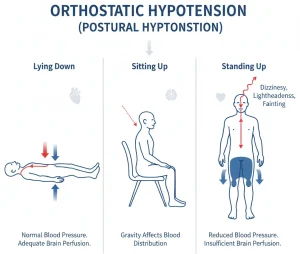
Orthostatic hypotension, also known as postural hypotension, is a condition in which blood pressure drops significantly when a person stands up from a sitting or lying position. This sudden drop reduces blood flow to the brain and can cause dizziness or fainting. It is more common in older adults but can occur at any age, especially in individuals with underlying medical conditions or those taking certain medications.
Symptoms
Symptoms usually occur shortly after standing and may last from a few seconds to several minutes:
-
Dizziness or lightheadedness
-
Blurred vision
-
Weakness or fatigue
-
Headache
-
Nausea
-
Fainting or near-fainting episodes
-
Confusion, especially in older adults
Causes
Orthostatic hypotension occurs when the body fails to adjust blood pressure quickly enough upon standing. Common causes include:
-
Dehydration reducing blood volume
-
Prolonged bed rest
-
Aging-related changes in blood pressure regulation
-
Heart problems affecting blood flow
-
Disorders of the nervous system
-
Blood loss
-
Certain medications such as diuretics, antidepressants, or blood pressure drugs
Risk Factors
Several factors increase the likelihood of developing orthostatic hypotension:
-
Older age
-
Dehydration or inadequate fluid intake
-
Diabetes or Parkinson’s disease
-
Cardiovascular disease
-
Use of blood pressure or psychiatric medications
-
Prolonged standing or sudden posture changes
Complications
If orthostatic hypotension is frequent or severe, it can lead to complications:
-
Increased risk of falls and injuries
-
Recurrent fainting episodes
-
Reduced ability to perform daily activities
-
Cardiovascular events in severe cases
-
Decreased quality of life
Prevention
Preventive strategies focus on minimizing blood pressure drops:
-
Standing up slowly from sitting or lying positions
-
Staying well hydrated
-
Avoiding prolonged standing
-
Wearing compression stockings if advised
-
Reviewing medications with a healthcare provider
-
Maintaining regular physical activity to improve circulation
Advertisement
