
Overview
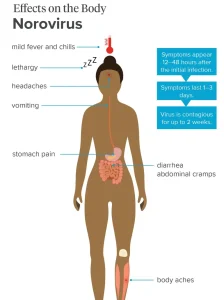
Norovirus infection is a highly contagious viral illness that affects the stomach and intestines, causing inflammation and irritation. It is a common cause of gastroenteritis, leading to vomiting, diarrhea, and stomach cramps. Norovirus spreads easily through contaminated food, water, surfaces, or close contact with infected individuals. The infection can affect people of all ages and often occurs in crowded settings such as schools, cruise ships, and healthcare facilities.
Symptoms
Symptoms of norovirus infection typically appear 12 to 48 hours after exposure and may include:
-
Sudden onset of nausea and vomiting
-
Watery diarrhea
-
Stomach cramps or abdominal pain
-
Low-grade fever
-
Headache and body aches
-
Fatigue or general weakness
Symptoms usually last for 1 to 3 days, though dehydration can complicate the illness, especially in young children, older adults, or people with weakened immune systems.
Causes
Norovirus infection is caused by viruses in the norovirus family. Infection occurs when the virus is ingested or comes into contact with the mouth, often through:
-
Consuming contaminated food or water
-
Touching contaminated surfaces and then touching the mouth
-
Close contact with an infected person, such as caring for someone who is ill
-
Consuming raw or undercooked shellfish from contaminated waters
The virus is highly resilient and can survive on surfaces for days.
Risk Factors
Several factors increase the risk of contracting norovirus:
-
Close contact with infected individuals
-
Living or working in crowded or enclosed settings
-
Poor hand hygiene
-
Consumption of contaminated food or water
-
Weakened immune system due to age or underlying conditions
Children and older adults are at higher risk of severe dehydration from infection.
Complications
Most norovirus infections resolve without serious complications, but dehydration is the main concern:
-
Severe fluid loss leading to electrolyte imbalances
-
Low blood pressure or dizziness from dehydration
-
Hospitalization in high-risk individuals
-
Rare complications such as kidney injury due to severe dehydration
Prompt fluid replacement can prevent most complications.
Prevention
Preventing norovirus infection focuses on hygiene and food safety:
-
Wash hands thoroughly with soap and water, especially after using the toilet and before eating
-
Disinfect contaminated surfaces with a bleach-based cleaner
-
Avoid preparing food for others while symptomatic and for at least 48 hours after recovery
-
Wash fruits and vegetables and cook seafood thoroughly
-
Isolate infected individuals to prevent spread
Good hygiene practices and careful food handling are key to reducing the spread of norovirus infection.
Request an appointment
Advertisement
