
Overview
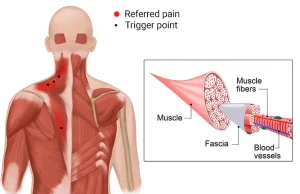
Myofascial pain syndrome is a chronic pain condition that affects the muscles and the connective tissue surrounding them, known as fascia. It is characterized by localized areas of muscle tightness called trigger points, which can cause pain both at the site and in other parts of the body.
This condition often develops due to muscle overuse, repetitive movements, or prolonged poor posture. Myofascial pain syndrome may affect a single muscle or multiple muscle groups and can persist for months or years if not properly managed.
Symptoms
Symptoms of myofascial pain syndrome can vary in intensity and may worsen with stress or physical activity.
Common symptoms include:
-
Deep, aching muscle pain
-
Persistent or worsening pain over time
-
Tender knots or trigger points in muscles
-
Pain that spreads to other areas when pressure is applied
-
Muscle stiffness or tightness
-
Reduced range of motion
-
Fatigue in affected muscles
-
Sleep disturbances due to pain
Pain may be constant or occur in episodes.
Causes
Myofascial pain syndrome develops when pressure or stress on muscles leads to the formation of trigger points.
Common causes include:
-
Repetitive muscle movements
-
Muscle injury or strain
-
Poor posture or ergonomics
-
Prolonged sitting or standing
-
Muscle tension related to stress or anxiety
-
Lack of physical activity
-
Improper lifting techniques
In some cases, multiple contributing factors may be involved.
Risk Factors
Certain factors increase the likelihood of developing myofascial pain syndrome.
Risk factors include:
-
Jobs involving repetitive tasks
-
Sedentary lifestyle
-
Poor workplace ergonomics
-
High stress levels
-
Muscle imbalances or weakness
-
Previous muscle injuries
-
Limited flexibility
Both physically active and inactive individuals can be affected.
Complications
If left untreated, myofascial pain syndrome can lead to ongoing discomfort and functional limitations.
Possible complications include:
-
Chronic pain conditions
-
Reduced physical activity
-
Decreased work performance
-
Sleep disorders
-
Emotional distress, including anxiety or depression
-
Dependence on pain medications
Early intervention can help prevent long-term complications.
Prevention
Myofascial pain syndrome can often be prevented by maintaining healthy muscle function and reducing strain.
Preventive measures include:
-
Practicing good posture
-
Taking regular breaks during repetitive activities
-
Stretching muscles daily
-
Strengthening muscles to improve balance and support
-
Managing stress effectively
-
Using proper techniques during physical activity
-
Ensuring ergonomic work and sleep environments
Addressing muscle discomfort early and adopting healthy movement habits can help reduce the risk of developing myofascial pain syndrome.
Advertisement
