
Overview
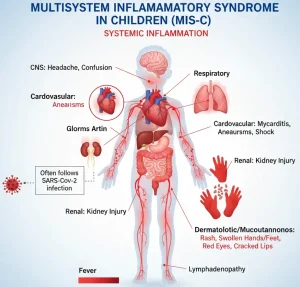
Multisystem Inflammatory Syndrome in Children is a rare but serious condition in which multiple organs become inflamed. It usually develops weeks after a child has been infected with a viral illness, even if the initial infection caused mild or no symptoms. The condition triggers an exaggerated immune response that can affect the heart, lungs, kidneys, brain, skin, eyes, and gastrointestinal system.
MIS-C requires prompt medical evaluation and treatment. With early recognition and appropriate care, most children recover well.
Symptoms
Symptoms of multisystem inflammatory syndrome in children can vary widely and often worsen quickly. A child may appear seriously ill and develop symptoms involving more than one body system.
Common symptoms include:
-
Persistent fever
-
Abdominal pain, vomiting, or diarrhea
-
Rash
-
Red eyes without discharge
-
Red or swollen lips and tongue
-
Swelling of hands or feet
-
Fatigue or weakness
-
Headache
-
Difficulty breathing
-
Chest pain or palpitations
Symptoms usually last several days and may progress rapidly.
Causes
The exact cause of multisystem inflammatory syndrome in children is not fully understood. It is believed to be an abnormal immune response that occurs after a viral infection rather than from active infection itself.
Contributing factors may include:
-
Delayed immune system reaction
-
Inflammation triggered by prior viral exposure
-
Immune system overactivation
MIS-C is not contagious and does not spread directly from child to child.
Risk Factors
Certain factors may increase the likelihood of developing multisystem inflammatory syndrome in children.
Known risk factors include:
-
Recent viral infection or exposure
-
School-age children and adolescents
-
Certain genetic or immune-related factors
-
Male sex in some populations
Most children who develop MIS-C were previously healthy.
Complications
MIS-C can lead to serious complications if not treated promptly, especially involving the heart and blood vessels.
Possible complications include:
-
Inflammation of the heart muscle
-
Low blood pressure or shock
-
Abnormal heart rhythms
-
Blood clot formation
-
Organ dysfunction involving kidneys or lungs
-
Neurological complications
Intensive medical care may be required in severe cases.
Prevention
There is no specific way to prevent multisystem inflammatory syndrome in children, but reducing the risk of viral infections lowers the likelihood of developing the condition.
Preventive measures include:
-
Practicing good hand hygiene
-
Avoiding close contact with sick individuals
-
Following public health recommendations during outbreaks
-
Seeking medical care promptly for persistent fever or concerning symptoms
-
Attending follow-up care after recovery from viral illness
Early recognition and timely treatment are key to preventing serious complications and supporting full recovery in children with MIS-C.
Request an appointment
Advertisement
