
Overview
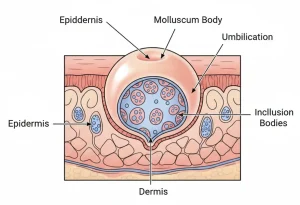
Molluscum contagiosum is a common viral skin infection that causes small, raised, painless bumps on the skin. It is caused by a poxvirus and spreads easily through direct skin-to-skin contact or by touching contaminated objects. The condition is generally harmless and often resolves on its own over time.
Molluscum contagiosum is most common in children, but it can also affect adults, especially those with weakened immune systems or those who have close skin contact with others.
Symptoms
Symptoms of molluscum contagiosum are usually mild and limited to the skin.
Common symptoms include:
-
Small, round, firm bumps on the skin
-
Flesh-colored, white, or pink lesions
-
A central dimple or indentation in each bump
-
Smooth and shiny surface of the bumps
-
Bumps that may appear in clusters
-
Mild itching or irritation around the lesions
The bumps typically appear on the face, trunk, arms, or legs in children, and on the genital area, lower abdomen, or inner thighs in adults.
Causes
Molluscum contagiosum is caused by infection with the molluscum contagiosum virus.
The virus spreads through:
-
Direct skin-to-skin contact
-
Touching contaminated objects such as towels, clothing, or toys
-
Scratching or rubbing the bumps and then touching other areas of skin
-
Sexual contact in adults
The virus enters the body through small breaks in the skin.
Risk Factors
Certain factors increase the likelihood of developing molluscum contagiosum.
Key risk factors include:
-
Young age, especially in children
-
Close contact with infected individuals
-
Participation in contact sports
-
Sharing personal items such as towels or clothing
-
Weakened immune system
-
Living in warm, humid environments
-
Having eczema or other skin conditions
People with weakened immunity may develop more widespread or persistent infections.
Complications
Molluscum contagiosum is usually mild, but complications can occur in some cases.
Possible complications include:
-
Secondary bacterial skin infections from scratching
-
Spread of lesions to other parts of the body
-
Inflammation or redness around the bumps
-
Scarring if lesions are picked or removed improperly
-
Prolonged infection in people with weakened immune systems
Prompt skin care and avoiding scratching help reduce complications.
Prevention
Preventing molluscum contagiosum focuses on reducing the spread of the virus.
Preventive measures include:
-
Avoiding direct contact with infected skin
-
Not sharing personal items such as towels, clothing, or razors
-
Covering visible bumps with clothing or bandages
-
Practicing good hand hygiene
-
Avoiding scratching or picking at lesions
-
Cleaning and disinfecting shared surfaces and objects
-
Practicing safe sexual behaviors
Maintaining good hygiene and minimizing skin contact with infected areas are key to preventing molluscum contagiosum and limiting its spread.
Advertisement
