
Overview
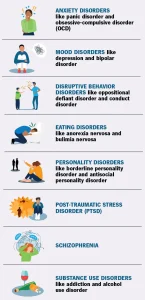
Mental illness refers to a wide range of mental health conditions that affect a person’s thinking, emotions, mood, behavior, or ability to function in daily life. These conditions can be short-term or long-lasting and may vary from mild to severe. Mental illness is common and can affect people of all ages, genders, and backgrounds. With proper care, support, and treatment, many individuals with mental illness can manage symptoms and lead fulfilling lives.
Symptoms
Symptoms of mental illness depend on the specific condition and its severity. They may affect emotional, psychological, and physical well-being.
Common symptoms may include
-
Persistent feelings of sadness, anxiety, or emptiness
-
Extreme mood changes or emotional instability
-
Withdrawal from friends, family, or social activities
-
Changes in eating or sleeping patterns
-
Difficulty concentrating or making decisions
-
Excessive fears, worries, or feelings of guilt
-
Loss of interest in activities once enjoyed
-
Fatigue or low energy
-
Thoughts of self-harm or suicide in severe cases
Causes
Mental illness often results from a combination of biological, psychological, and environmental factors rather than a single cause.
Common causes include
-
Genetic factors or family history of mental health conditions
-
Chemical imbalances in the brain affecting mood and behavior
-
Traumatic life experiences such as abuse, neglect, or loss
-
Chronic stress or prolonged exposure to adverse situations
-
Substance abuse, including alcohol or drugs
-
Certain medical conditions or medications
Risk Factors
Some individuals may be more vulnerable to developing mental illness due to various risk factors.
Key risk factors include
-
Family history of mental illness
-
Exposure to trauma or violence
-
Long-term stress related to work, finances, or relationships
-
Social isolation or lack of support
-
Chronic physical illness
-
Alcohol or drug misuse
-
Major life changes or losses
Complications
If left untreated, mental illness can significantly affect personal, social, and physical health.
Possible complications include
-
Difficulty maintaining relationships
-
Problems with work, education, or daily responsibilities
-
Increased risk of substance abuse
-
Worsening physical health conditions
-
Social isolation or homelessness
-
Self-harm or suicidal behavior
-
Reduced quality of life
Prevention
Not all mental illnesses can be prevented, but early intervention and healthy coping strategies can reduce the risk and severity.
Preventive measures may include
-
Seeking help early when emotional or behavioral changes appear
-
Managing stress through relaxation and mindfulness practices
-
Maintaining strong social connections
-
Avoiding alcohol and drug misuse
-
Prioritizing regular sleep, exercise, and balanced nutrition
-
Accessing mental health education and support services
Promoting awareness and reducing stigma around mental illness play a vital role in encouraging early diagnosis and effective treatment.
Advertisement
