
Overview
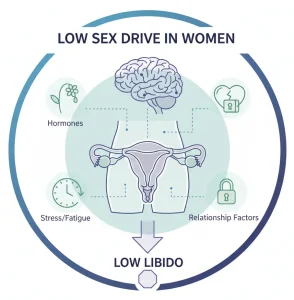
Low sex drive in women, also known as female hypoactive sexual desire, is characterized by a persistent or recurrent lack of interest in sexual activity that causes personal distress. Sexual desire naturally varies over time and may be influenced by physical, emotional, and relationship factors. When low libido becomes ongoing and affects quality of life or relationships, it may require evaluation and support.
Symptoms
Symptoms of low sex drive in women may include:
-
Reduced or absent interest in sexual activity
-
Few or no sexual thoughts or fantasies
-
Lack of response to sexual stimulation
-
Decreased initiation of intimacy
-
Distress or frustration related to low desire
Symptoms must cause concern or emotional difficulty to be considered a clinical issue.
Causes
Low sex drive often results from a combination of physical, hormonal, psychological, and relational factors:
-
Hormonal changes during menopause, pregnancy, or postpartum
-
Low estrogen or testosterone levels
-
Chronic medical conditions such as diabetes or thyroid disorders
-
Depression, anxiety, or chronic stress
-
Relationship problems or emotional disconnect
-
Certain medications, including antidepressants
-
Fatigue or sleep disturbances
Identifying the underlying cause is essential for effective management.
Risk Factors
Factors that may increase the likelihood of experiencing low sex drive include:
-
Aging and menopause
-
History of sexual trauma
-
Chronic illness
-
Mental health conditions
-
Major life changes or stress
-
Use of medications affecting hormones or mood
These factors may influence both physical and emotional aspects of sexual desire.
Complications
Low sex drive can lead to several challenges:
-
Relationship strain
-
Reduced self-esteem
-
Emotional distress
-
Avoidance of intimacy
-
Increased anxiety or depressive symptoms
Open communication and professional support can help address these complications.
Prevention
Low sex drive cannot always be prevented, but healthy lifestyle and relationship habits may help:
-
Maintaining open communication with a partner
-
Managing stress effectively
-
Getting adequate sleep
-
Engaging in regular physical activity
-
Addressing medical or hormonal concerns promptly
-
Seeking counseling when emotional or relationship issues arise
Early recognition and comprehensive care can help improve sexual well-being and overall quality of life.
Advertisement
